
Vesuvius: The Mountain That Never Leaves the Room
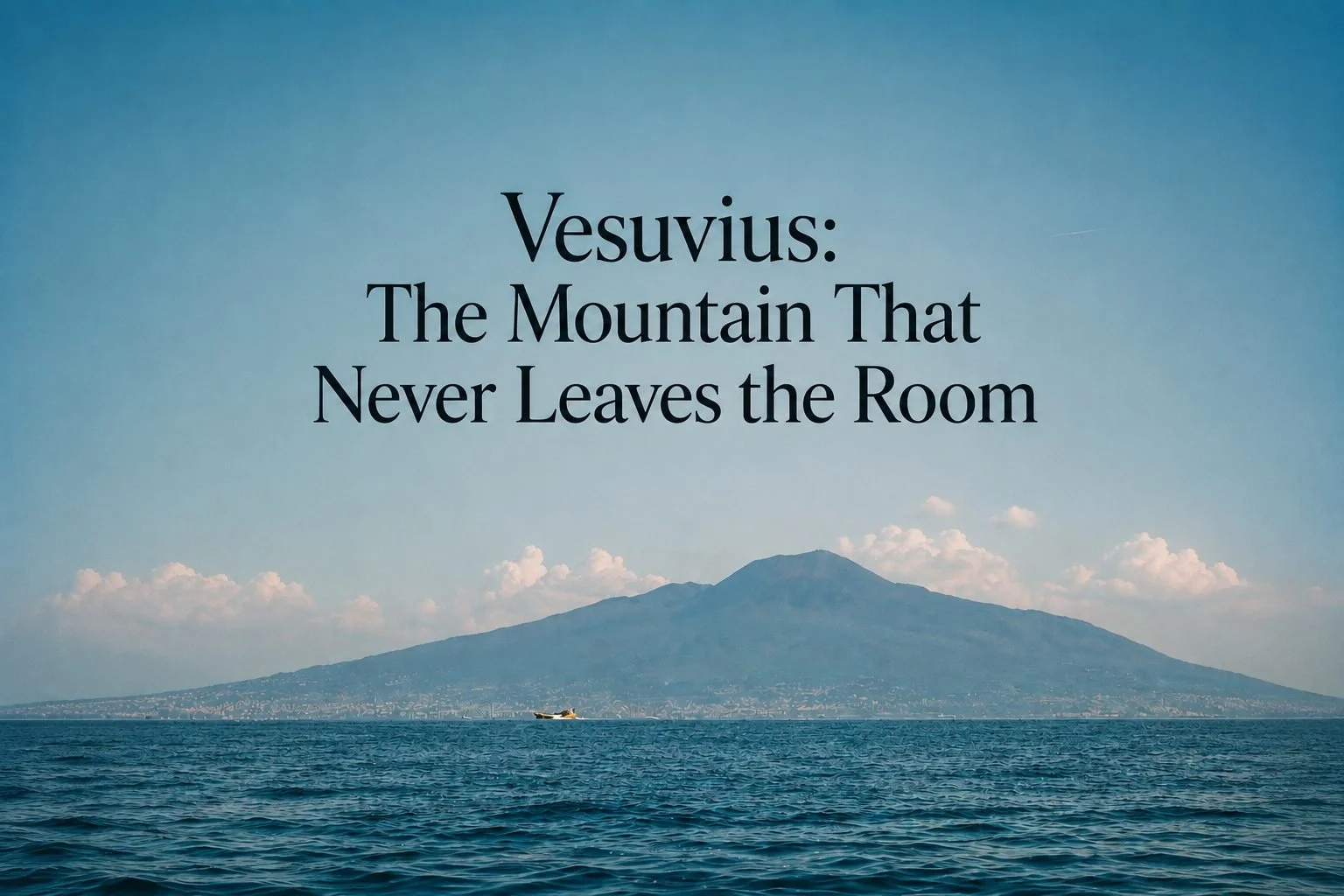
Above Naples, an ancient volcano continues to shape the landscape, the imagination, and the lives of those who dwell beneath it
Some mountains provide a backdrop, and some become a presence.
Mount Vesuvius belongs to the latter category. Rising beyond the Bay of Naples, its dark, recognizable silhouette appears from terraces, railway platforms, palace windows, and crowded city streets. It may be softened by evening light or partially concealed by summer haze, yet it is rarely forgotten. Even when perfectly still, Vesuvius seems to occupy more than its share of the horizon.
The mountain is beautiful, but its beauty is inseparable from knowledge. Everyone looking toward it understands that Vesuvius is not merely a picturesque elevation. It is an active volcano, the source of one of history’s most famous natural disasters and a permanent reminder that civilization is often built beside forces it cannot control.
This tension has given Vesuvius its enduring fascination. It is at once landscape and warning, tourist destination and geological threat, destroyer and preserver. Few places demonstrate so clearly how closely beauty, danger, memory, and human ambition can coexist.
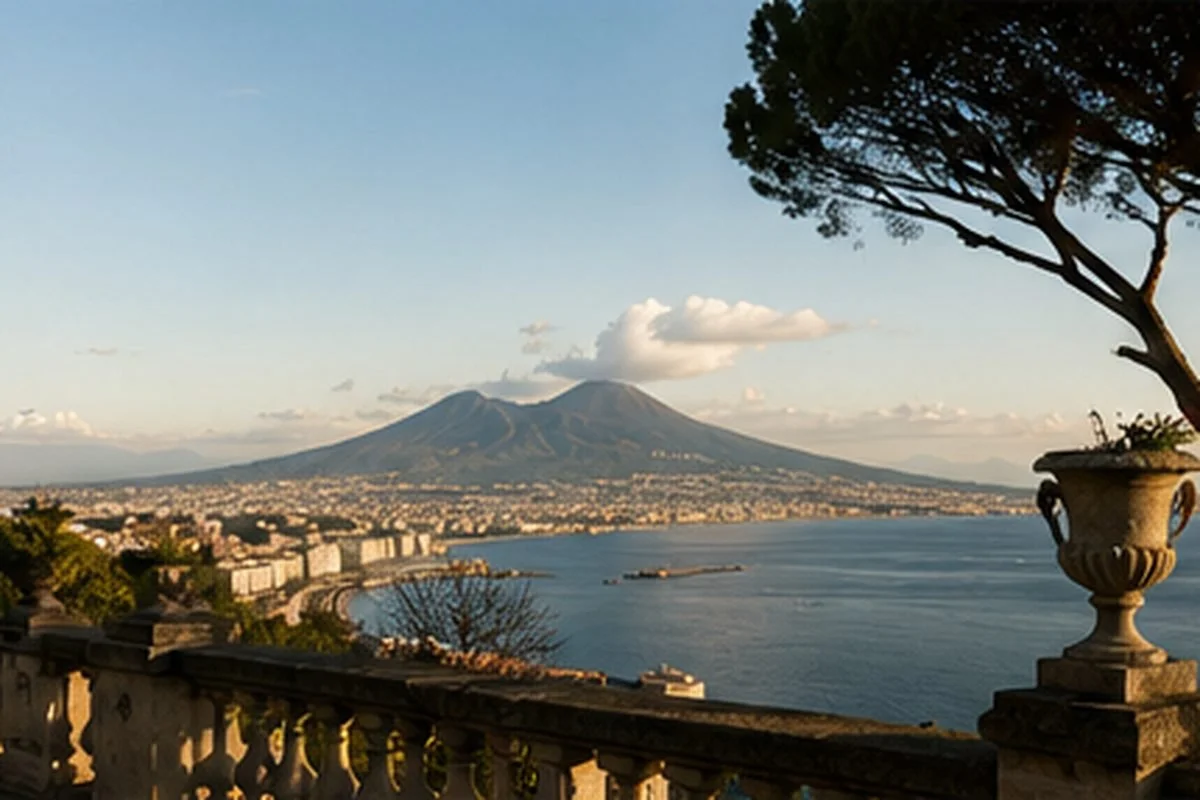
The Mountain Above the Bay - Vesuvius has shaped not only the geography of Naples, but the agriculture, architecture, and visual identity of the region beneath it.
The Mountain Above the Bay
Vesuvius stands east of Naples, overlooking one of the most densely inhabited and historically significant regions in southern Italy.
From a distance, the mountain appears almost composed. Its broad slopes descend toward a landscape of towns, vineyards, roads, and archaeological ruins. The surrounding region has been inhabited for centuries because volcanic soil is remarkably fertile. Grapes, tomatoes, apricots, and other crops have flourished in ground formed by earlier eruptions.
This is one of the central paradoxes of volcanic landscapes: the same geological force that can destroy a settlement may also make the land unusually productive.
Life beneath Vesuvius has therefore never been defined by fear alone. The mountain has supported agriculture, shaped local architecture, influenced religious traditions, and entered the visual identity of Naples itself. It appears in paintings and photographs not as an intruder but as an unmistakable part of the place.
Yet the calmness of the landscape can be deceptive. Vesuvius is part of the larger Somma-Vesuvius volcanic complex, and its present shape reflects centuries of eruptions, collapses, and geological change. It is not a monument left behind by the ancient world. It remains active.
Its last eruption occurred in 1944, during the Second World War. Though far less catastrophic than the eruption of A.D. 79, it destroyed nearby villages, damaged aircraft stationed in the area, and reminded a modern population that Vesuvius had not passed into history.
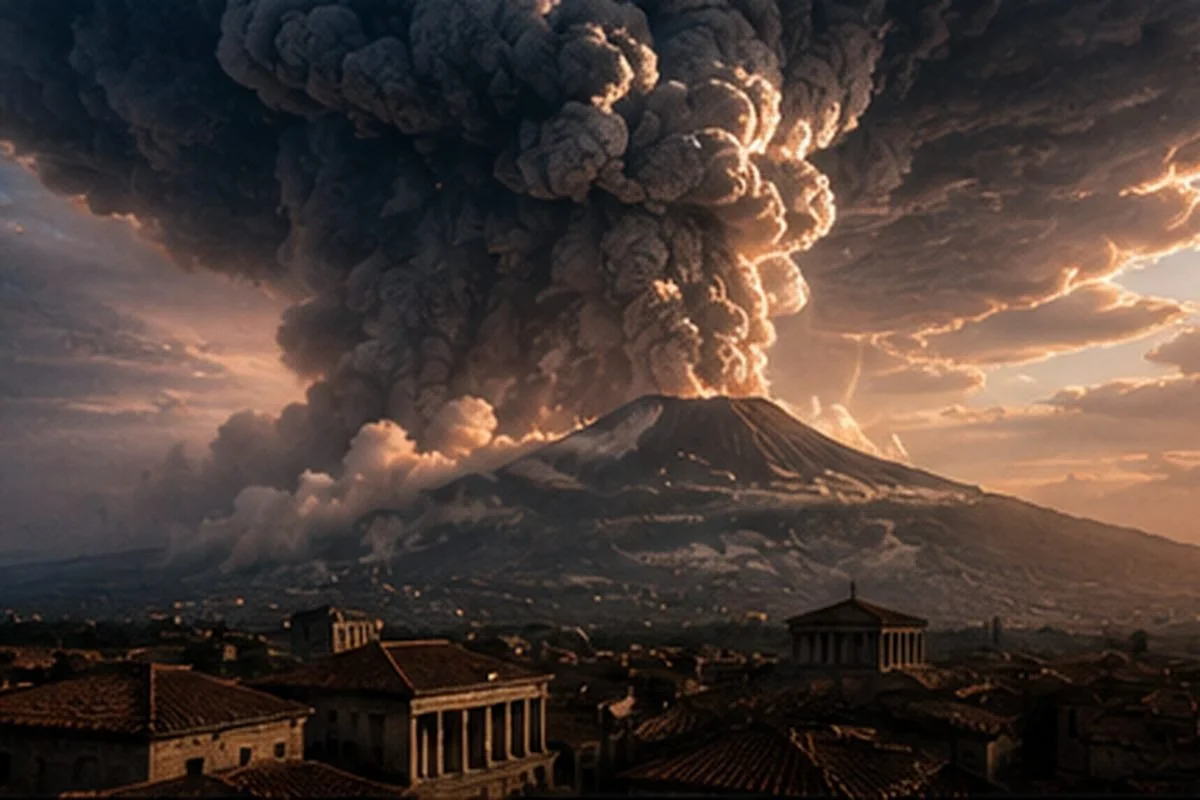
The Day Pompeii Disappeared - The eruption of A.D. 79 buried Pompeii and neighboring towns beneath ash and volcanic material, transforming Vesuvius into one of history’s great symbols of catastrophe.
The Day Pompeii Disappeared
The eruption of A.D. 79 transformed Vesuvius from a local mountain into one of the great symbols of historical catastrophe.
Before the eruption, many residents of the surrounding Roman towns may not have understood that the mountain was volcanic. Its slopes were cultivated, and prosperous communities had developed throughout the region. Pompeii was a thriving commercial town. Herculaneum, closer to the coast, contained elegant houses and villas. Stabiae was known for its luxurious residences.
Then the mountain erupted.
The precise sequence of events has been reconstructed through archaeology, geological evidence, and the surviving letters of Pliny the Younger, who observed the eruption from across the Bay of Naples. He described an enormous cloud rising above the mountain, shaped, in his comparison, like a pine tree: a tall trunk expanding into branches.
Pumice and ash began to fall across Pompeii. Roofs collapsed under the accumulating weight. Streets became difficult to navigate. Some residents escaped during the early stages, while others remained, perhaps hoping the danger would pass or attempting to protect their homes and possessions.
It did not pass.
Later, fast-moving surges of superheated gas, ash, and volcanic material swept through the region. Herculaneum was overwhelmed. Pompeii was buried. Thousands of people died, although the exact number remains unknown.
The eruption was terrible, but its burial of the towns produced an extraordinary consequence. Buildings, household objects, inscriptions, paintings, food remains, workshops, gardens, and human bodies were preserved beneath layers of volcanic material.
Vesuvius destroyed these communities, yet it also protected their traces from many of the ordinary processes by which ancient places disappear.
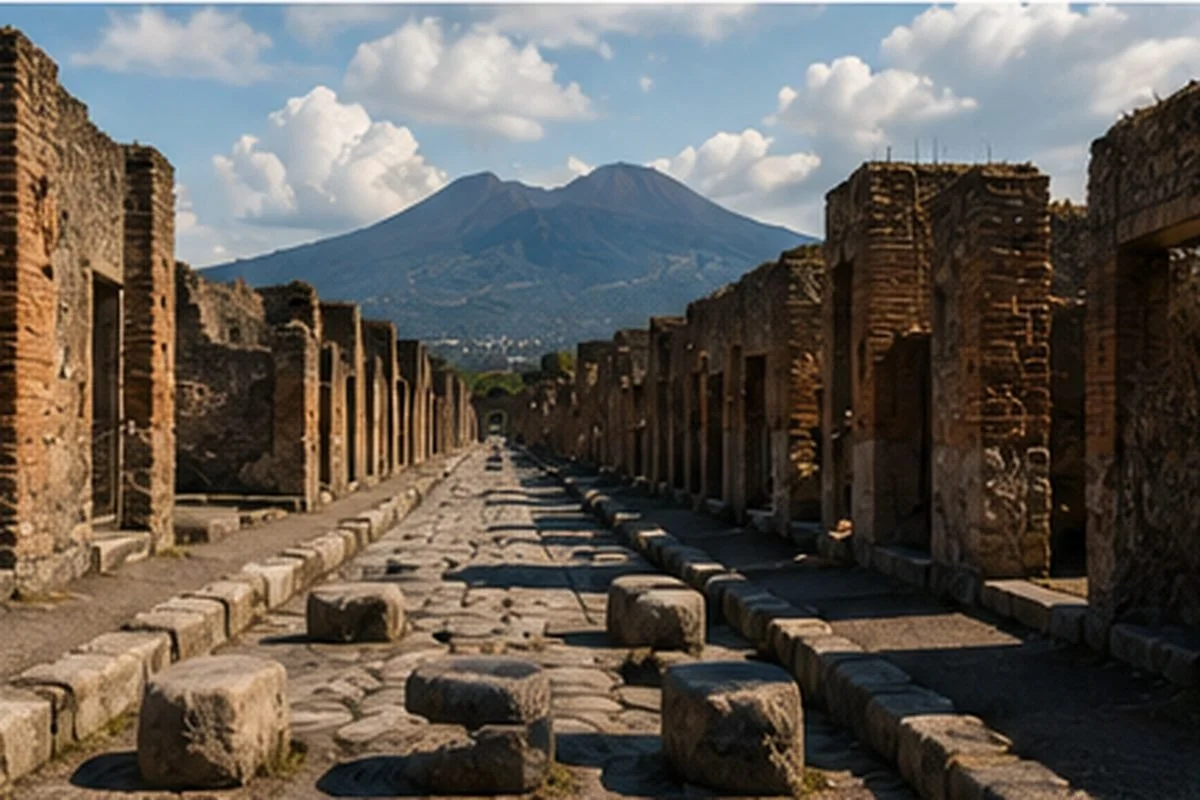
A City Preserved in Interruption - Pompeii remains extraordinary not simply because it was destroyed, but because so much of ordinary Roman life survived beneath the ash.
A City Preserved in Interruption
Pompeii continues to fascinate because it does not feel like a conventional ruin.
Most ancient sites present themselves as fragments. A column survives without its roof. A foundation suggests the outline of a vanished building. A broken statue stands where a palace once existed.
Pompeii is different. Its power comes from interruption.
The city appears to have been stopped rather than gradually abandoned. Its bakeries, bathhouses, villas, taverns, temples, courtyards, and streets still retain the shape of daily life. Political messages remain painted on walls. Mosaics survive in private homes. Warehouses and workshops reveal how goods were produced and sold. Graffiti records jokes, arguments, desires, endorsements, and ordinary vanity.
The famous casts of victims, created by filling voids left in the hardened ash, are especially affecting. They do not allow the eruption to remain an abstract historical event. They reveal people caught in acts of protection, fear, flight, and final stillness.
Visitors often arrive expecting spectacle. What they encounter instead is intimacy.
Pompeii’s significance is not simply that an ancient city was destroyed. It is that the details of its life survived. The site narrows the distance between the modern visitor and the Roman world. Its inhabitants cease to appear as distant historical types and become recognizable human beings who decorated their homes, advertised their businesses, complained about politicians, ate meals with friends, and made plans for a tomorrow that never arrived.
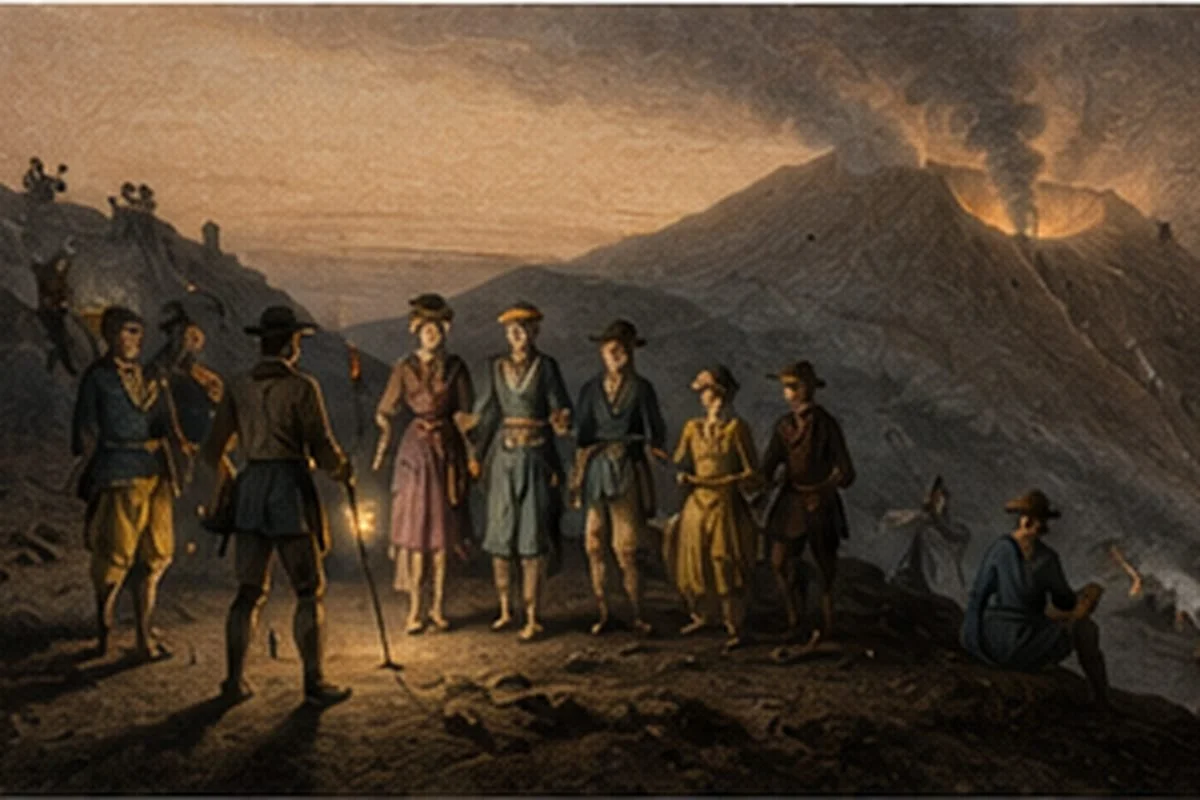
Vesuvius and the European Imagination - By the eighteenth and nineteenth centuries, climbing Vesuvius had become part of the cultivated traveler’s encounter with antiquity, danger, and the sublime.
Vesuvius and the European Imagination
When systematic excavations of Pompeii and Herculaneum began in the eighteenth century, the discoveries transformed European art and taste.
Visitors on the Grand Tour came south to see the buried cities and, increasingly, to climb Vesuvius itself. The volcano became part of the cultivated traveler’s education. It offered something that galleries and libraries could not: direct confrontation with antiquity and natural power.
The objects uncovered near Vesuvius influenced architecture, furniture, interior decoration, painting, and fashion. Roman wall paintings inspired decorative schemes across Europe. Classical motifs appeared in salons, libraries, ceramics, and textiles. The ancient world no longer had to be imagined solely through literary texts or monumental ruins. It could be studied through bedrooms, dining rooms, lamps, jewelry, and domestic gardens.
Vesuvius also appealed to the Romantic imagination. Travelers climbed the mountain by torchlight, peered into the crater, collected fragments of lava, and wrote dramatically of fire, smoke, terror, and sublimity.
For them, the volcano represented nature beyond discipline. It could be observed, described, painted, and measured, but never fully mastered.
This combination of scholarship and danger made Vesuvius irresistible. It stood at the meeting point of archaeology, geology, tourism, art, and theater.
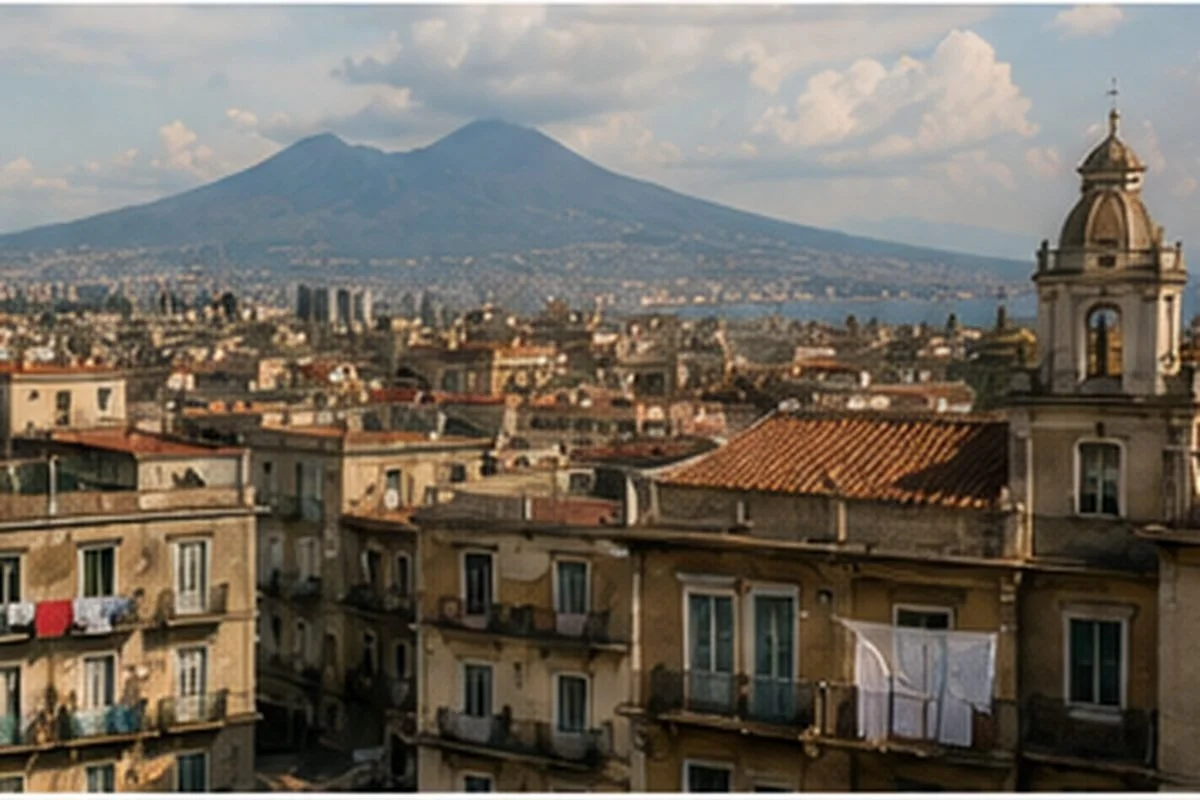
Living With an Active Volcano - For modern Naples, Vesuvius is both a geological threat and an inseparable part of the city’s landscape, history, and identity.
Living With an Active Volcano
Modern Vesuvius is heavily monitored. Scientists study seismic activity, gas emissions, ground deformation, and other potential signs of unrest. Emergency planning is a serious concern because millions of people live in the wider Naples region, with hundreds of thousands in areas considered particularly vulnerable.
The danger is not imaginary, but neither is an eruption continuously imminent. Volcanoes operate according to geological rhythms that rarely align with human expectations. Long periods of quiet can encourage complacency, while the absence of certainty makes preparation difficult.
Residents live with this ambiguity as generations before them have done.
To outsiders, settling beneath an active volcano may seem reckless. Yet cities throughout the world stand beside coastlines, rivers, fault lines, forests, and other sources of natural danger. People remain because danger is only one element of a place. Family, work, history, beauty, identity, and belonging are often stronger.
Vesuvius is not merely something that threatens Naples. It is part of what makes Naples itself.
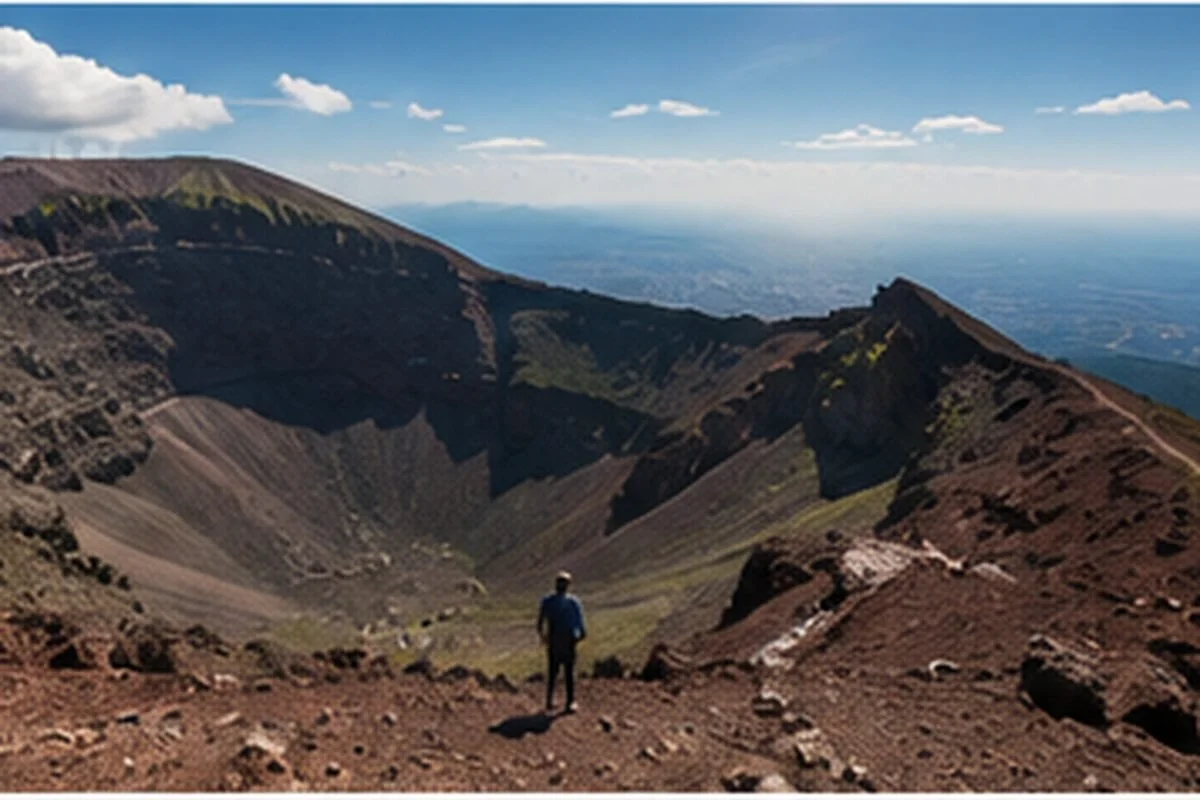
The View From the Crater - At the summit, Vesuvius reveals itself not as cinematic fire, but as a vast, scarred, and unexpectedly silent volcanic landscape.
The View From the Crater
Today, visitors can ascend Vesuvius and walk toward the rim of its crater. The landscape changes during the climb. Urban density gives way to stretches of dark volcanic ground, loose stone, hardy vegetation, and wide views across the bay.
From above, the region appears almost peaceful. Naples spreads along the water. The islands rise in the distance. Towns cover the lower slopes. Pompeii lies below, its streets exposed once more to sunlight.
The crater itself may disappoint anyone expecting cinematic fire. There is no permanent lake of lava waiting at the summit. Instead, the visitor encounters a vast, scarred hollow: silent, mineral, and austere.
That silence is precisely what gives the place its force.
Standing there, it becomes difficult to divide the mountain into past and present. The eruption of A.D. 79 is ancient history, but the volcano that caused it remains beneath one’s feet. The ruins below belong to another civilization, yet the modern towns around them are also filled with homes, shops, traffic, schools, and ordinary routines.
Vesuvius makes history feel less securely finished.
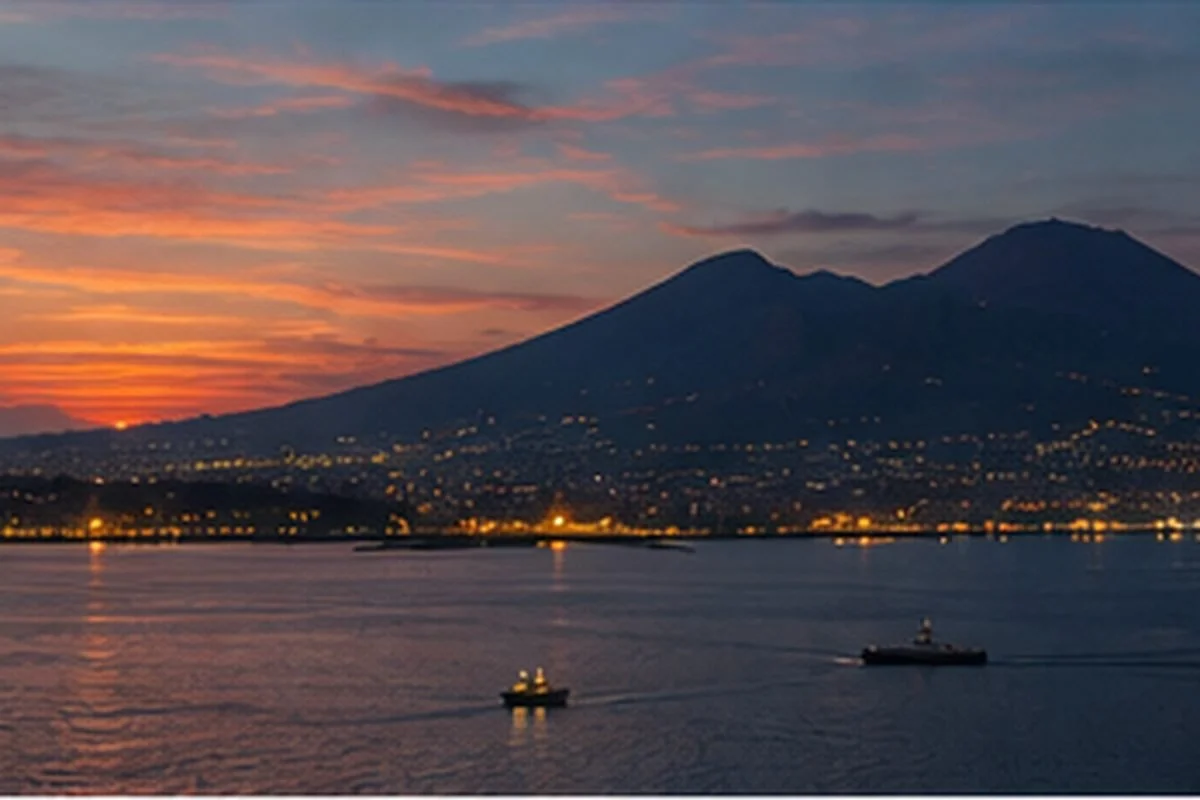
The Mountain That Preserved What It Destroyed - Vesuvius remains a contradiction: destroyer and preserver, danger and landmark, a mountain that never entirely recedes from the life around it.
The Mountain That Preserved What It Destroyed
The enduring power of Vesuvius lies in contradiction.
It created fertile soil and buried fertile land. It destroyed cities and preserved them. It became a symbol of death while giving later generations an unequaled view of ancient life. It attracts travelers through the very danger that makes it feared.
Most monuments are built by human beings in the hope of defeating time. Vesuvius produced its own monument accidentally, covering a civilization so completely that parts of it survived.
Perhaps that is why the mountain continues to dominate the imagination. It reminds us that permanence is uncertain, that ordinary life is historically valuable, and that nature does not recognize the distinction between a great civilization and a collection of vulnerable human homes.
Above Naples, Vesuvius remains quiet.
But it never quite disappears.