
The Hotel Bar: The Last Truly Civilized Room
How the Great Hotels Turned a Place to Drink into a Stage for Conversation, Intrigue, and Escape
A hotel bar is one of the few rooms in which a man may be alone without appearing lonely.
He may arrive before dinner, place a book beside his glass, and watch the room gather itself. No explanation is required. He is neither host nor guest, neither resident nor stranger. He belongs for as long as he occupies the chair.
This is part of the hotel bar’s enduring appeal. It is public without being exposed, social without being demanding, and glamorous without requiring spectacle. At its best, it is not simply a place that serves drinks. It is a carefully arranged form of civilization.
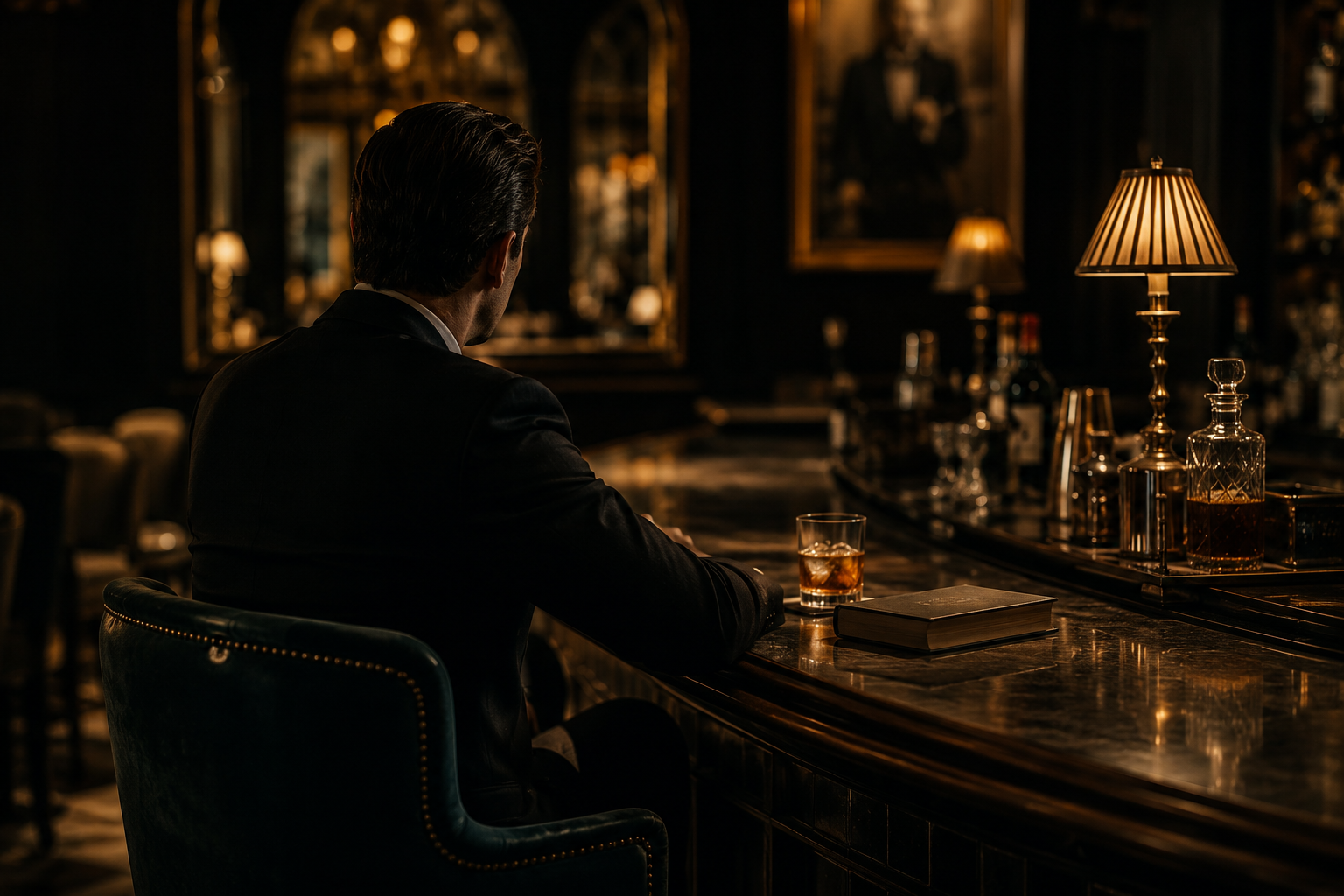
A hotel bar offers the rare privilege of being alone without appearing lonely.
Neutral Territory
Ordinary bars belong to neighborhoods, regulars, scenes, and tribes. A hotel bar belongs to movement. Its clientele is always in transit: the diplomat between appointments, the writer avoiding his room, the businessman waiting for a client, the couple extending an evening, the traveler newly arrived.
Because no one entirely owns the room, everyone may enter it on equal terms. The guest in the finest suite and the local who has come only for one drink occupy the same low light.
The great hotel bar is therefore neutral territory. Meetings happen there because neither party is required to host. Deals are discussed there because conversation can be private without being clandestine. A lobby is too exposed; a restaurant imposes the structure of a meal. The bar offers enough ceremony to make an encounter feel intentional and enough informality to permit escape.
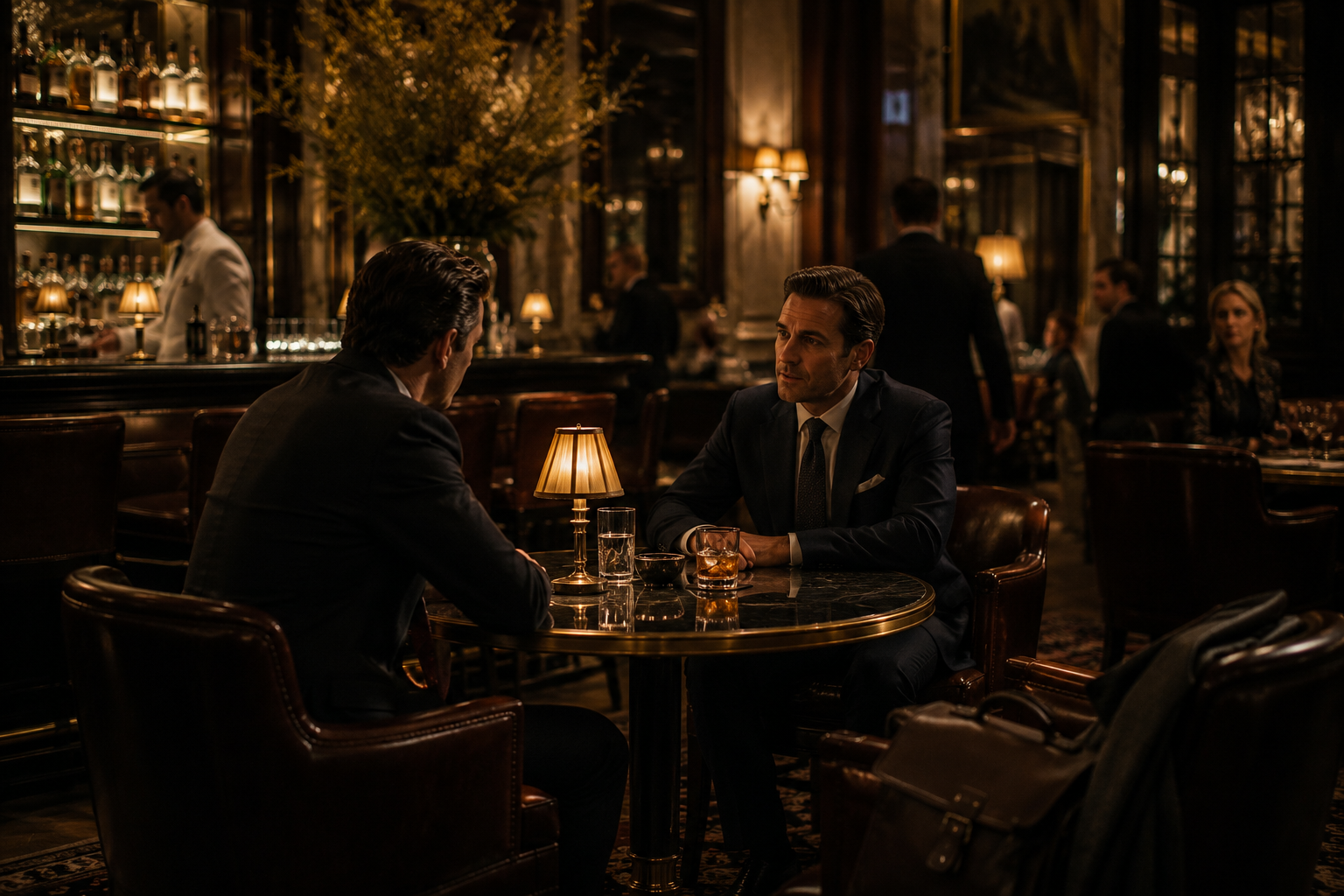
Neither office nor private club, the hotel bar allows conversation to begin on equal terms.
A Room Built for Watching
The finest examples are rarely large. Their power comes from proportion, not scale. The ceiling is low enough to feel enclosing. Light falls on faces and glassware rather than flooding the room. Mirrors multiply movement without making observation obvious. Chairs are angled for conversation but not confrontation. The bar itself provides both a destination and a refuge for the solitary guest.
Good hotel bars also understand sound. Music should alter the room without occupying it. Ice, glass, piano, and low voices form part of the atmosphere, but no single element becomes aggressive.
Bemelmans Bar at The Carlyle in New York demonstrates how strongly a room can be shaped by art and music. Opened in 1947, it is surrounded by Ludwig Bemelmans’s murals of Central Park and remains associated with piano and late-night jazz. The result is neither nightclub nor museum. It is a room with memory.
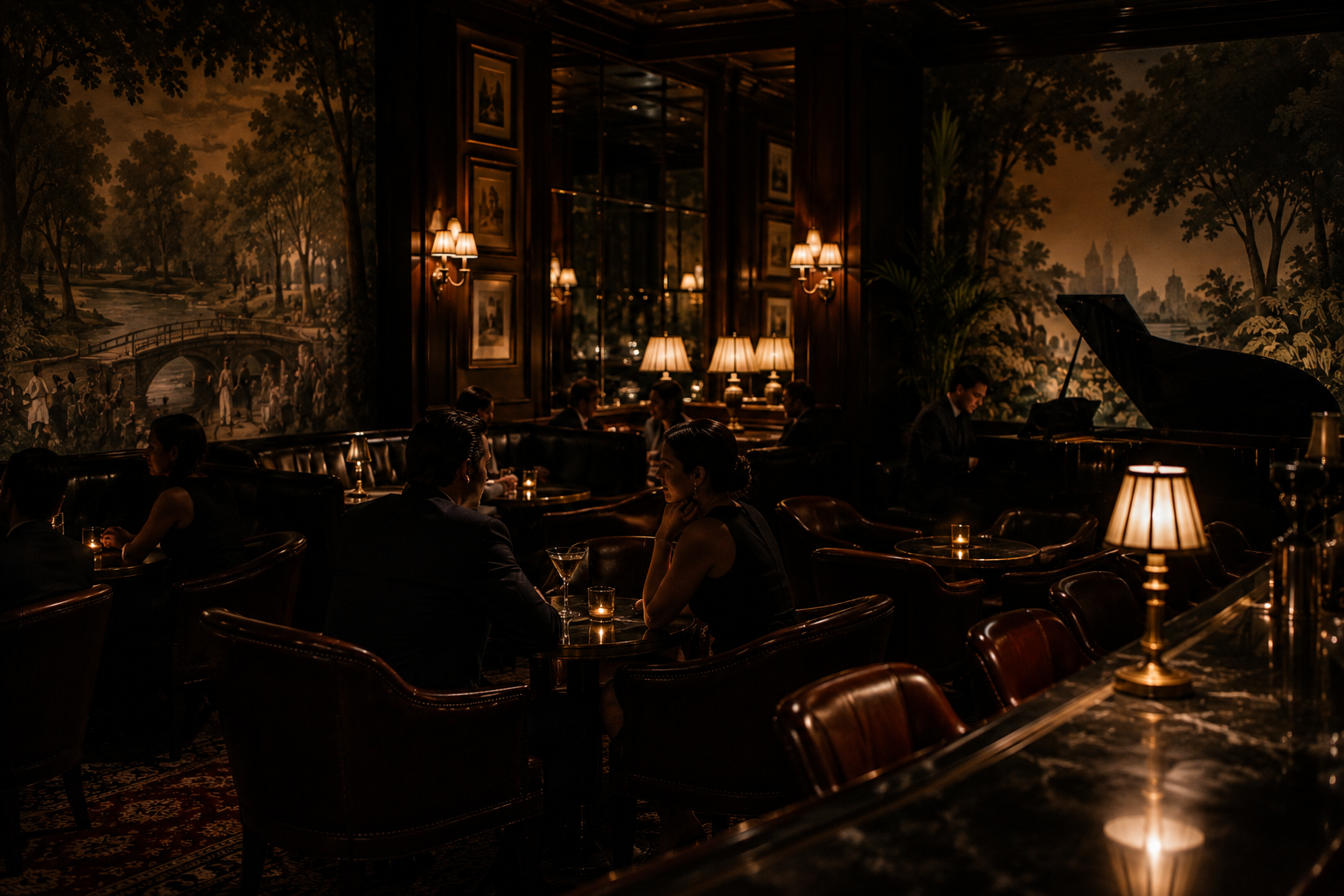
The finest hotel bars are arranged as much for observation as for conversation.
The Bartender as Custodian
A great hotel bar depends less upon novelty than recognition. The bartender notices who wishes to speak and who prefers silence. He remembers a drink without turning memory into performance. He understands when a guest is waiting for someone and when a conversation should not be interrupted.
This is hospitality at its most intelligent: attentive without being familiar and discreet without becoming cold.
The American Bar at The Savoy describes itself as London’s original cocktail bar and has long been associated with celebrated head bartenders and drinks created for guests and occasions.
Its history illustrates the essential point: the bartender is the room’s editor, adjusting pace and tone while allowing the evening to appear effortless.
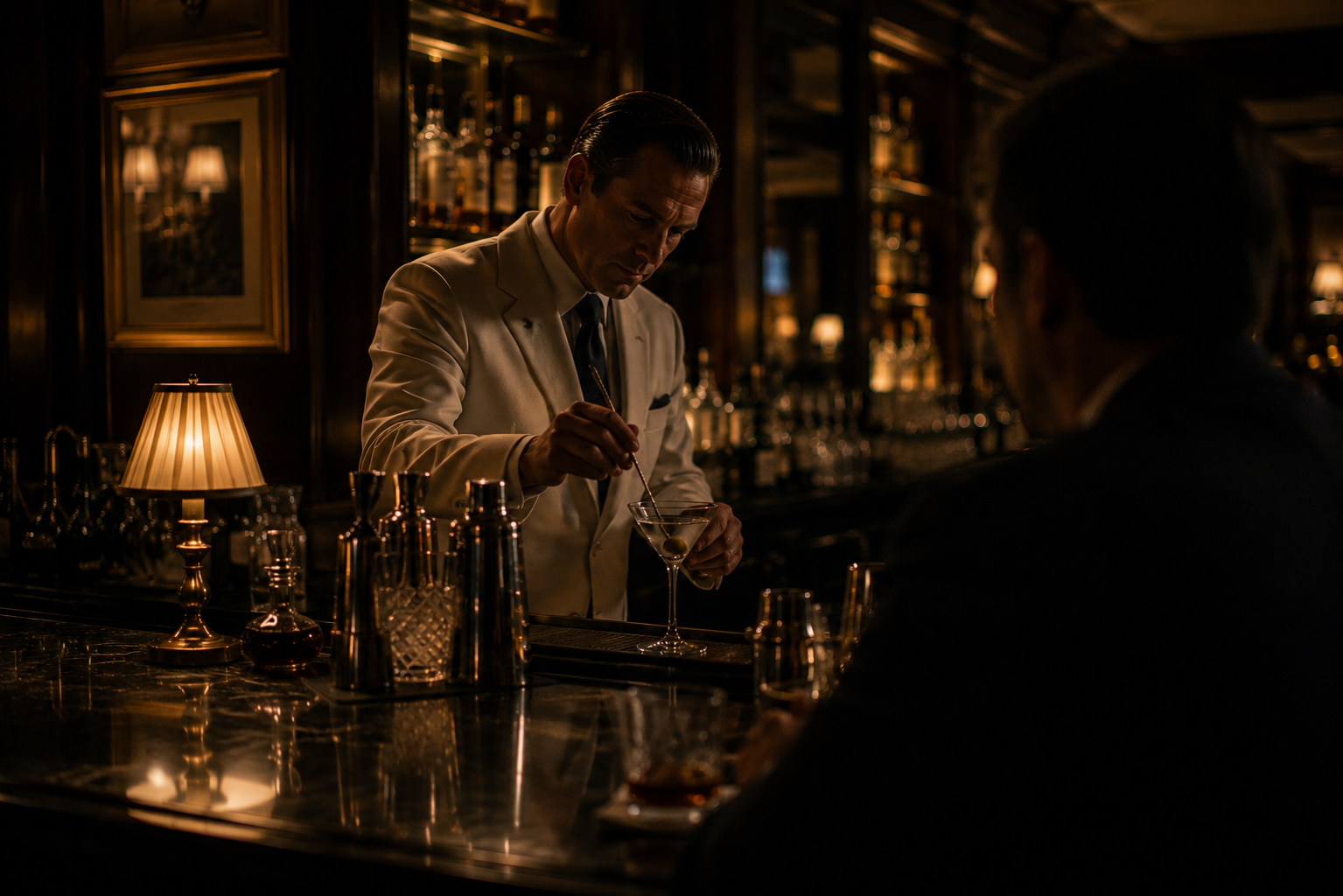
The great bartender governs the room through attention rather than display.
Discretion as Atmosphere
Hotels have always offered a particular kind of privacy. They allow people to be seen without being known. The doorman, waiter, and bartender may understand more than they acknowledge, and their refusal to display that knowledge is part of the service.
Discretion is not merely secrecy. It is the protection of proportion. A famous guest is permitted to become simply another man at the bar. A private conversation remains private even when it could technically be overheard. A person sitting alone is given company if he seeks it and space if he does not.
This quality cannot be manufactured through velvet, brass, or dim lighting alone. It depends upon staff who understand that hospitality includes knowing what not to notice.
Drinks With a Sense of Place
The best hotel bars do not feel interchangeable. Their drinks, rituals, and details belong to the city around them.
At Raffles Singapore, the Long Bar is linked to the creation of the Singapore Sling in 1915. Its design recalls Malayan life in the 1920s, while the custom of brushing peanut shells onto the floor introduces sanctioned disorder into an otherwise polished hotel.
At the Ritz Paris, Bar Hemingway trades on an unusually intimate relationship between a writer and a hotel. Hemingway made the Ritz a regular headquarters from the 1920s onward, spending time there with figures including F. Scott and Zelda Fitzgerald.
The small, club-like bar is dense with association. One visits not merely for a martini, but to enter a version of Paris preserved through ritual and recollection.
These histories give the drink a setting. A cocktail becomes more memorable when it could not have been served in precisely the same manner anywhere else.
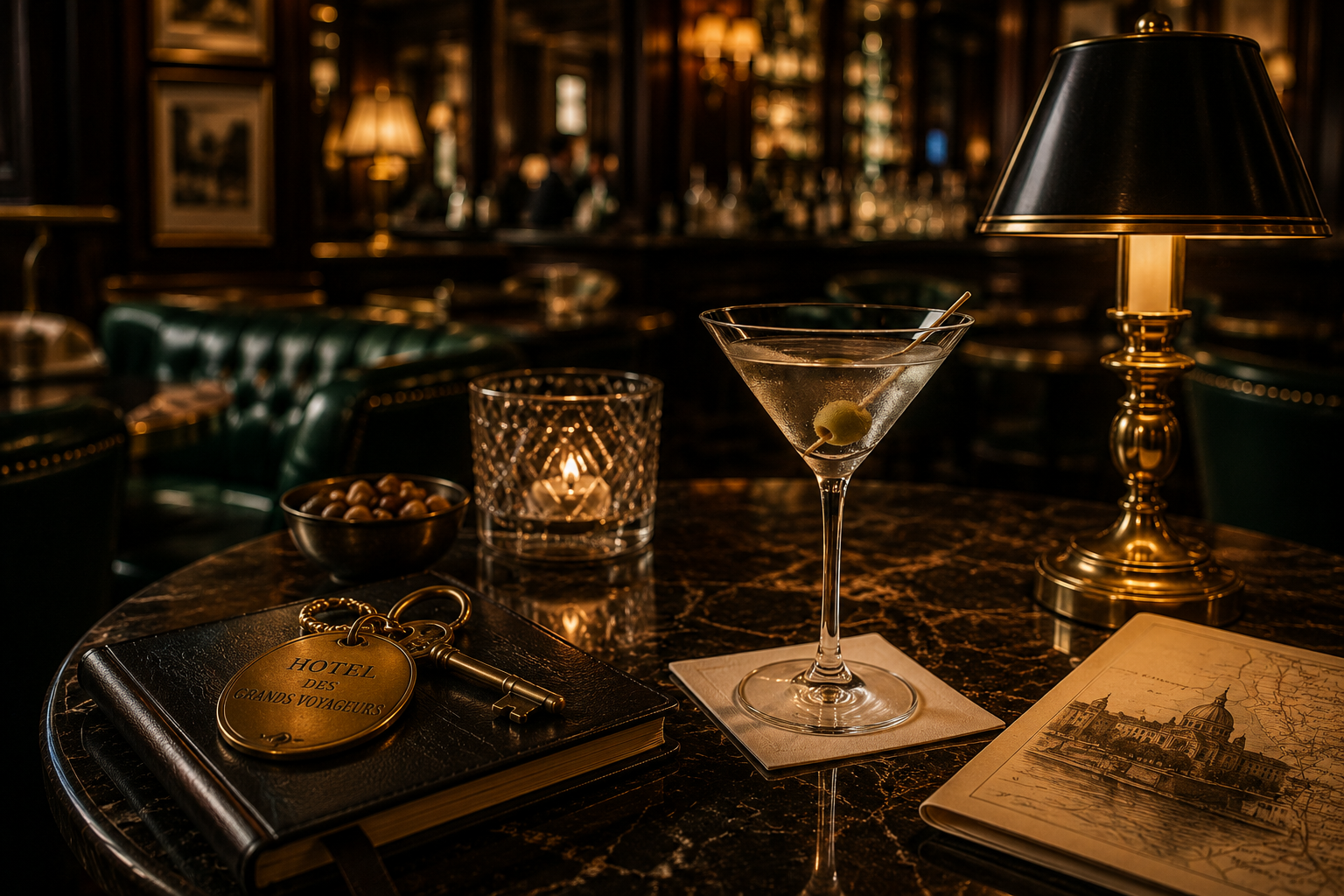
A memorable hotel drink belongs as much to its surroundings as to its ingredients.
The Civilized Art of Lingering
Modern life is hostile to lingering. Restaurants reserve the table again. Offices measure time. Social media converts every attractive room into a background to be captured before it has been experienced.
The hotel bar resists this pace. One drink may occupy an hour. A guest may sit before his companion arrives and remain after the companion has gone. There is no need to make the evening productive. The room’s purpose is fulfilled by attention, conversation, and time passing agreeably.
It also remains suited to the lost art of talking with strangers. The shared bar, the pianist, or a delayed flight offers an opening. No formal introduction is required, and no future friendship is demanded. Two people may exchange stories or opinions and then disappear into different elevators.
Such encounters are small, but they matter. Civilization depends partly upon our ability to be at ease among people we do not know.
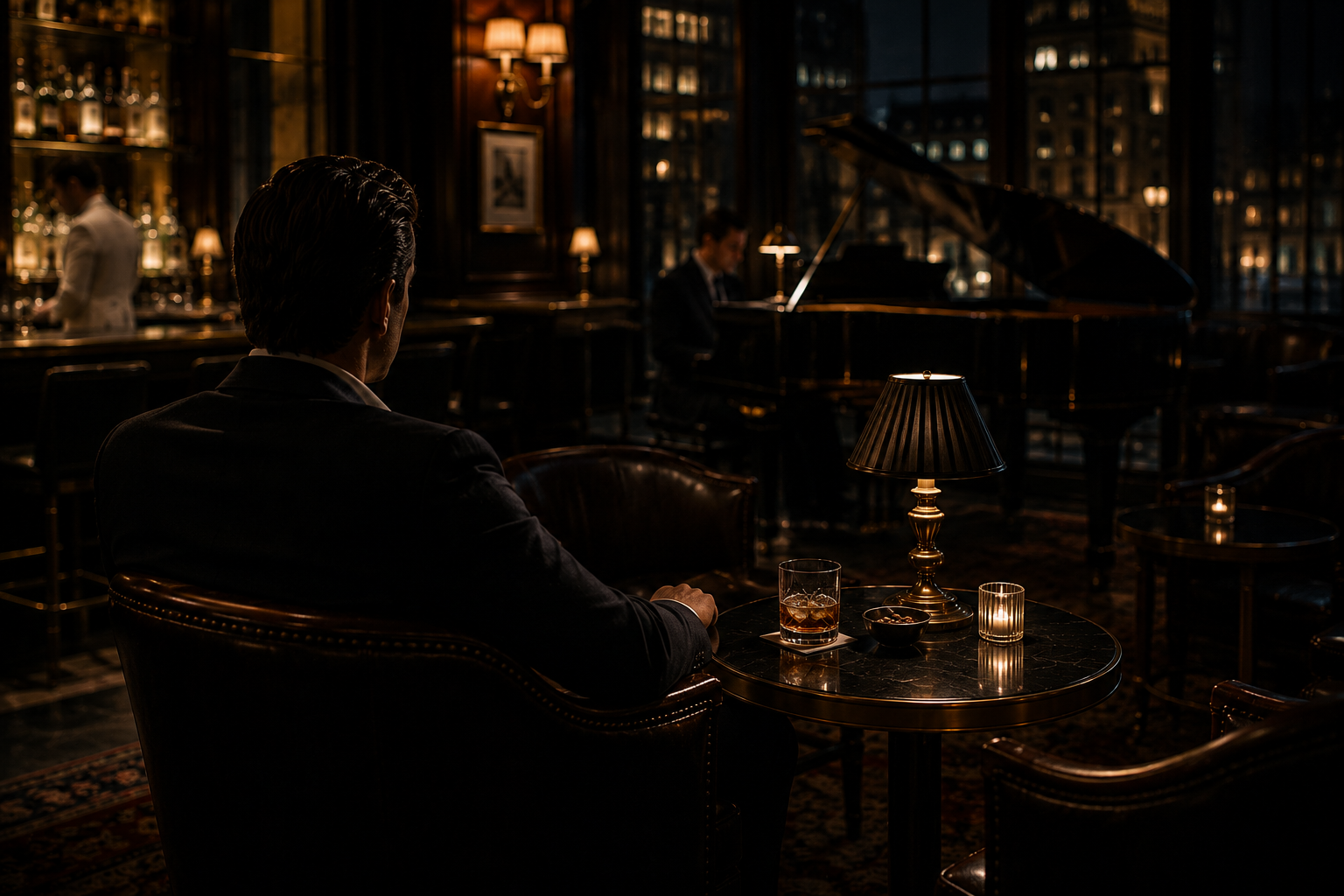
For an hour, there is nothing to accomplish beyond remaining present.
The Unwritten Etiquette
The hotel bar asks little, but rewards manners.
Dress as though the room matters. Do not occupy more space than necessary. Keep telephone calls brief and elsewhere. Treat the bartender as a professional, not a servant or captive audience. Do not force conversation upon the solitary drinker. Never confuse atmosphere with permission to become loud.
Above all, understand that sophistication is measured by the comfort one creates around oneself.
The Last Good Room
To call the hotel bar the last truly civilized room is an exaggeration, but a useful one. Libraries, clubs, cafés, and private homes still preserve attention and courtesy. Yet the hotel bar singularly combines them. It offers the privacy of a study, the theater of a restaurant, the neutrality of a station, and the ease of a drawing room whose host never tires.
Its finest luxury is not the marble, the silver shaker, or the rare bottle. It is the temporary suspension of ordinary life.
Outside, appointments wait, messages accumulate, and the city continues at full speed. Inside, the light is low, the pianist has begun, and for an hour there is nowhere else one is expected to be.