
The New Luxury Is Being Unreachable
Why Time, Privacy, and Undivided Attention Have Become the Ultimate Status Symbols
There was a period when luxury announced itself through abundance: more rooms, more staff, more luggage, more silver on the table, and a motorcar waiting at the door. Today, abundance is no longer rare. Most of us carry access to more music, correspondence, entertainment, and information than an emperor could have commanded. What has become scarce is not access, but escape.
The modern mark of privilege is increasingly the ability to be unavailable.
To close a door without anxiety. To spend an afternoon without reporting one’s location. To read for an hour without a screen lighting up beside the chair. In a culture that treats immediate response as good manners and permanent accessibility as professional virtue, undivided attention has acquired the character of luxury: expensive, conspicuous, and difficult to protect.
The Closed Door
The architecture of earlier households understood that serious life required thresholds. There were drawing rooms for company, dining rooms for ceremony, libraries for study, and private rooms into which one did not simply wander.
George Washington’s study at Mount Vernon was both a working office and a retreat from the demands of guests; according to the estate, entrance was by invitation. Thomas Jefferson arranged his cabinet, library, greenhouse, and bedchamber as a connected private suite at Monticello, creating a protected world within the house.
These rooms were not valuable only because they were handsome. Their real luxury was jurisdiction. The person inside controlled who entered, which papers were opened, and when the outer world would be admitted.
Even communication was designed around distance. As country houses expanded, bell systems and speaking tubes allowed messages to travel without every request becoming an intrusion. The technology was primitive, but the principle was sophisticated: one could remain connected without surrendering the room.
The study, library, smoking room, garden pavilion, and country retreat all served variations of the same purpose. They gave thought a border.
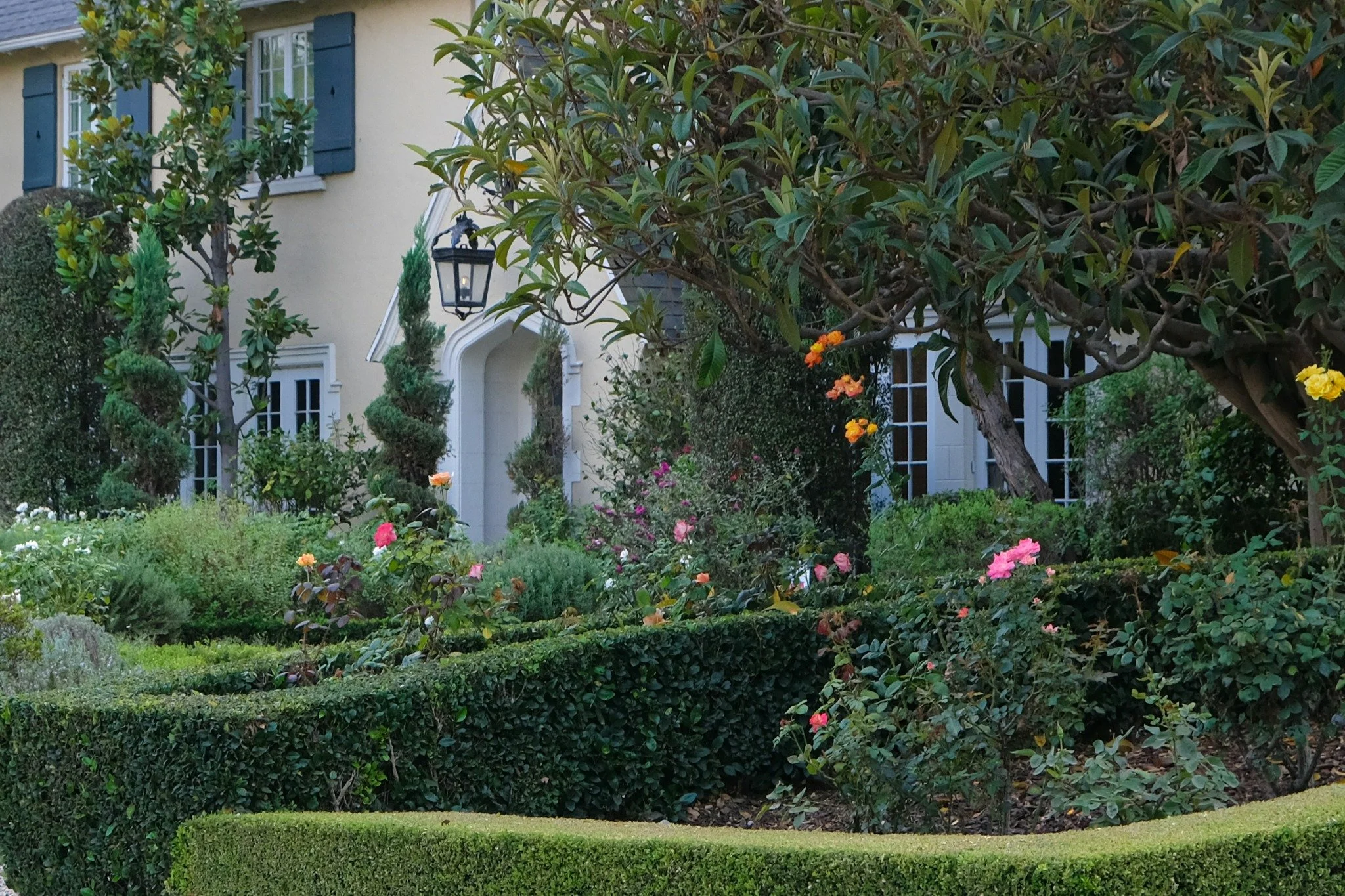
The real privilege of the private house was not merely space, but the authority to decide where the outside world ended.
The Collapse of the Threshold
The smartphone did not merely place a telephone in the pocket. It dissolved the walls around us. The office enters the bedroom; the news enters dinner; strangers enter the morning before one’s own thoughts have properly arrived. Every pause becomes an opportunity to check, answer, refresh, or react.
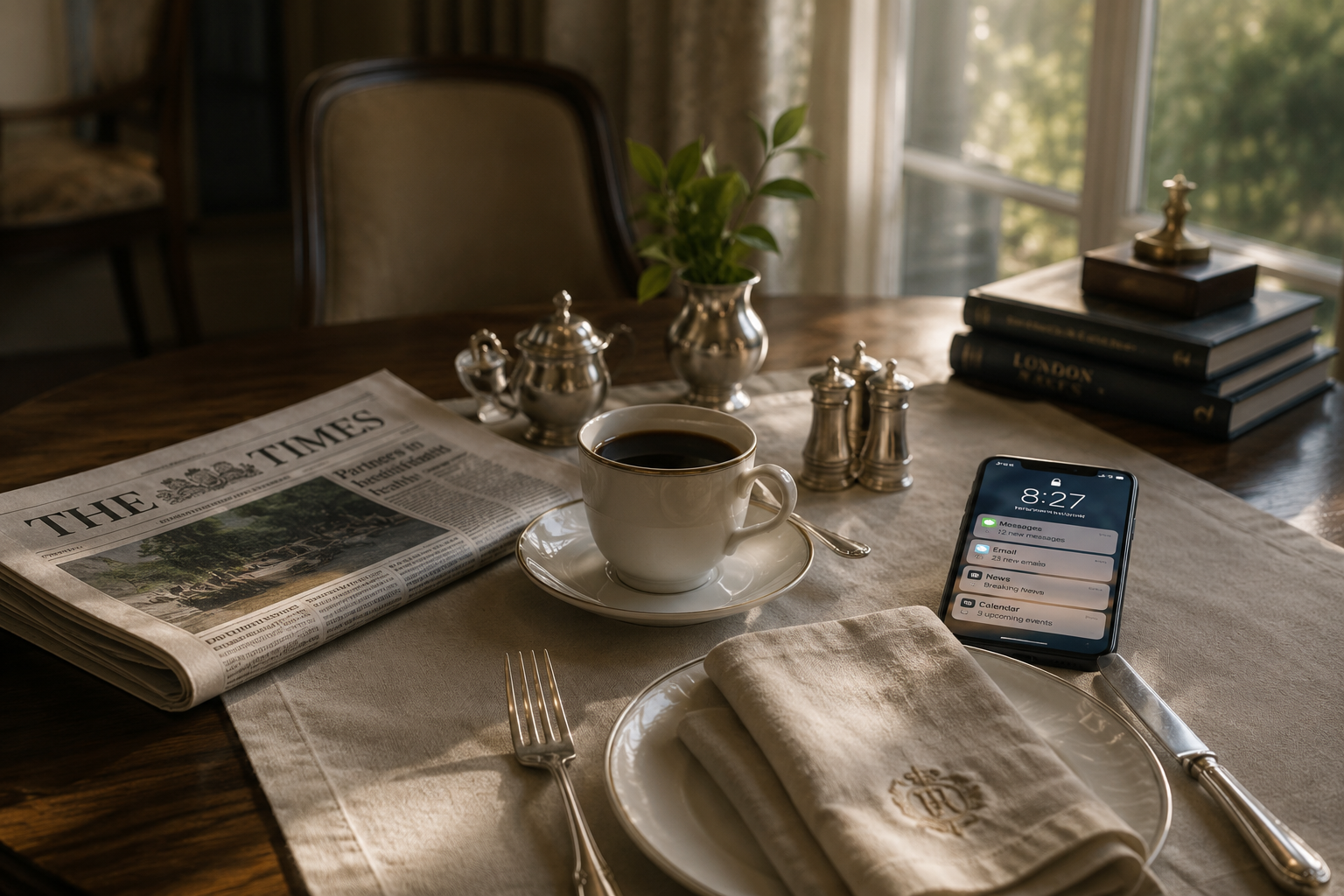
The office, the news, and the demands of strangers now enter rooms that were once protected from them.
This constant contact can masquerade as importance. A crowded inbox suggests relevance. A vibrating telephone suggests demand. Speed suggests competence. Yet there is a difference between being needed and being perpetually interruptible. The first may be a consequence of responsibility. The second is often a failure to establish terms.
Earlier generations of public men were not necessarily less busy. They were surrounded by correspondence, visitors, household obligations, political pressures, and practical affairs. But access was mediated. Letters arrived in batches. Callers observed hours. Secretaries decided what required attention. A man might be responsible for an estate, a newspaper, or a government department without carrying all of it to the breakfast table in his pocket.
Winston Churchill’s study at Chartwell was his workshop and the heart of the house. He used it for decades, dictating to a secretary and organizing work within a defined setting. The room did not eliminate responsibility. It gave responsibility a place.
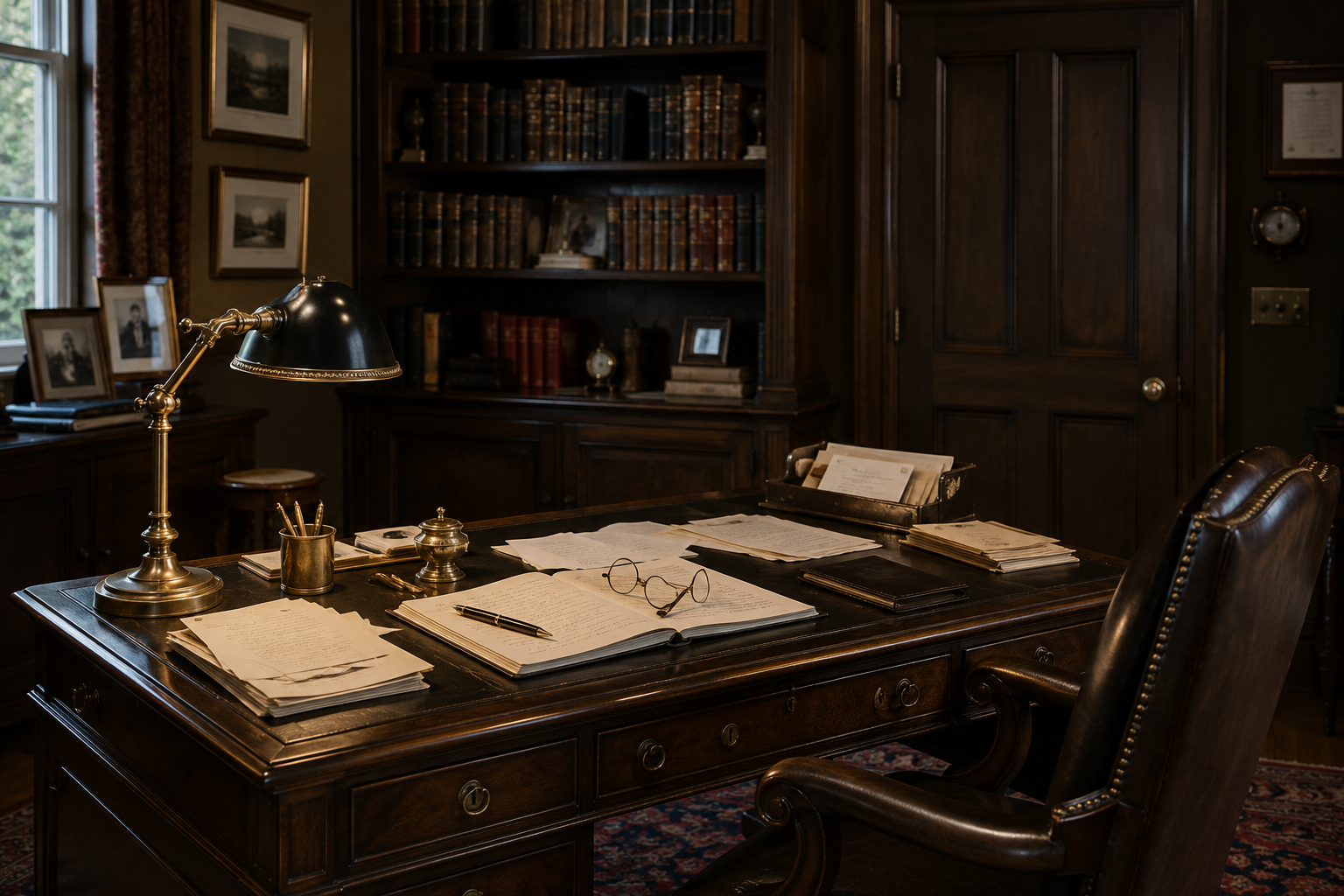
Responsibility becomes more manageable when it is assigned a room, a time, and a boundary.
The Status of Attention
Luxury has always depended upon scarcity. Once an object becomes universally obtainable, its symbolic force weakens. The same has happened with information and communication. Messages are cheap. Opinions are instant. Photographs are endless. The scarce commodity is the person who is wholly present.
This is why attention has become so compelling. A host who remembers what was said at dinner; a friend who listens without glancing downward; a father who walks without answering calls; a businessman who considers a proposal before replying—each communicates a kind of command. He is not dragged from stimulus to stimulus. He chooses what enters his mind.
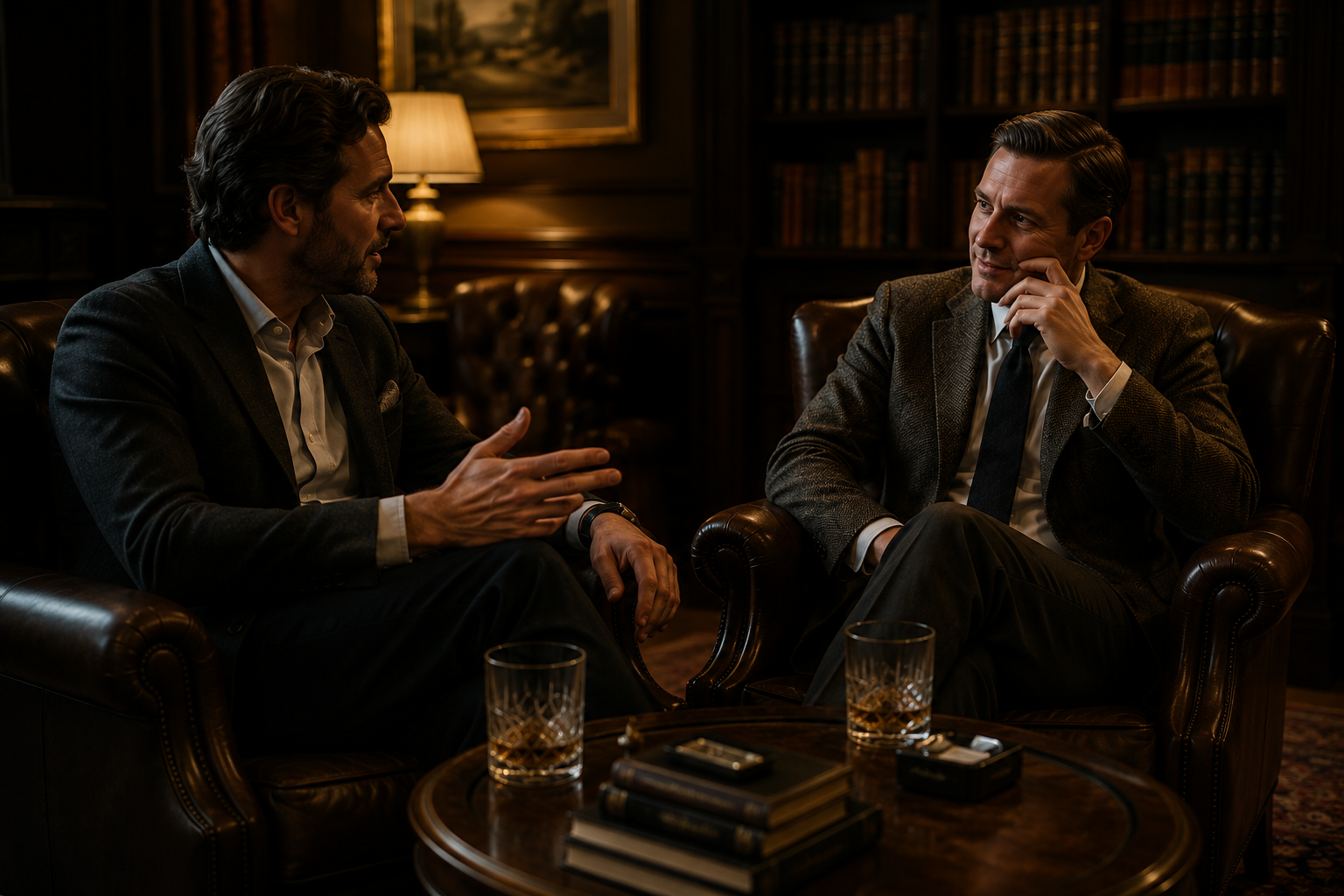
In an age of permanent distraction, giving another person one’s full attention has become a mark of command.
Being unreachable, properly understood, is not theatrical disappearance. It is not neglect, arrogance, or the affected refusal to answer. Genuine privacy is quieter and more disciplined. It means arranging one’s availability rather than allowing others to arrange it.
There is confidence in delayed response. It says that not every request is an emergency and not every thought improves by being expressed at once. It restores proportion.
Solitude Without Isolation
The cultivated life has always required some withdrawal. Reading, writing, prayer, design, strategy, memory, and judgment are weakened when repeatedly broken into fragments. Conversation itself depends upon inwardness; a person with no private mental life eventually has little of interest to bring back into company.
The finest retreats are therefore not acts of rejection. Washington returned from his study to receive guests. Churchill emerged from his work to dine, paint, walk, and debate. Virginia Woolf’s writing lodge at Monk’s House provided separation from the main house, but belonged to a life filled with books, visitors, and conversation.
Solitude becomes civilized when it renews one’s capacity for engagement. It is not a wall against the world, but a room in which the self is put back in order.
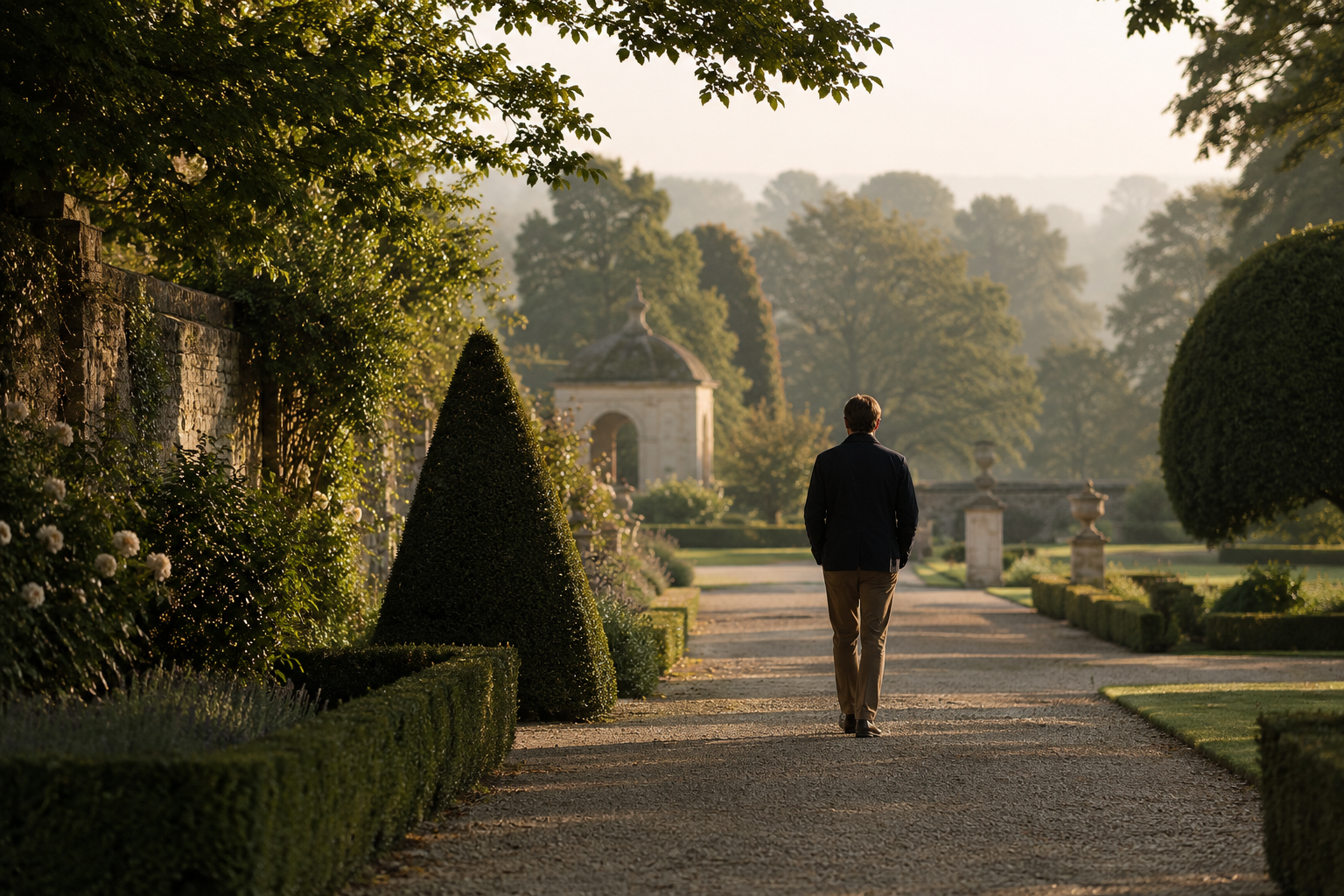
Civilized solitude is not a rejection of the world, but preparation to return to it with greater attention.
Reclaiming the Private Hour
One need not own an estate to recover the principle. A chair can become a study if the telephone is left elsewhere. A morning walk can become private territory if it is not documented. Dinner can recover ceremony when the table is no longer treated as a charging station.
The essential practice is to create visible borders. Establish hours in which messages are answered rather than answering them continuously. Permit some calls to wait. Carry a notebook when the instinct is to reach for a screen. Read one thing long enough to disagree with it intelligently. Leave the house without announcing the departure to an audience.
Most importantly, resist the idea that availability is proof of affection. The people closest to us are often given the poorest version of our attention because they receive whatever remains after every distant demand has been satisfied.
A protected hour with one’s child, spouse, friend, or book is not withdrawal from life. It is a return to it.
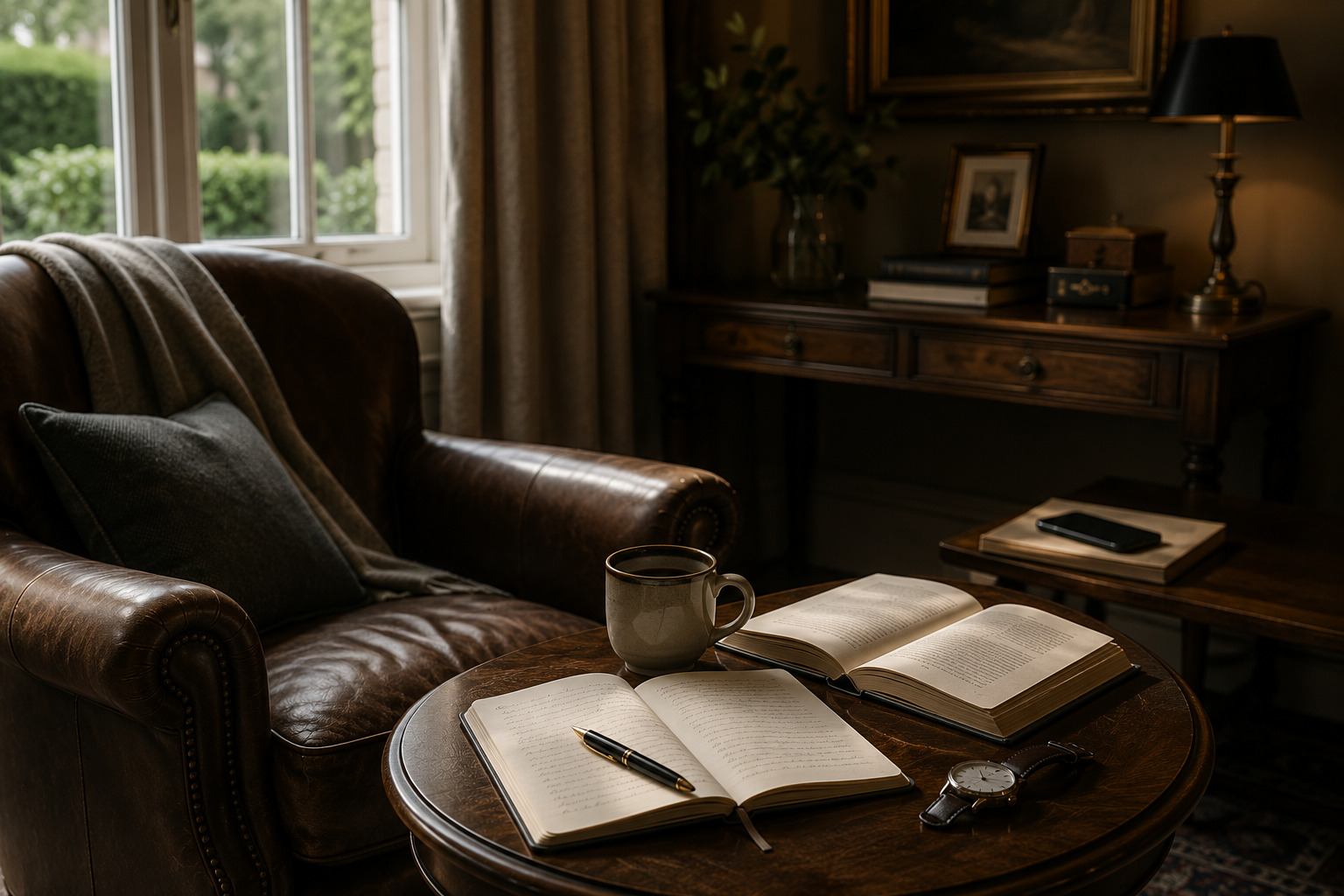
The private hour begins when attention is no longer available on demand.
The Possession of One’s Own Time
The old symbols of luxury have not disappeared. A beautiful room, a quiet hotel, a finely made object, and a journey undertaken well still matter. But their value is diminished if they cannot secure attention. There is little luxury in a villa from which one conducts the same frantic digital life one led at home.
The ultimate status symbol may therefore be invisible: an afternoon no one can interrupt, a conversation no one records, a thought allowed to reach its natural conclusion.
To be unreachable for a time is not to become unimportant. It is to remember that importance should not require permanent access.
The gentleman of the present age may be distinguished less by how many people can summon him than by whether he still possesses the authority to say: not now.