
Why Bespoke Still Matters
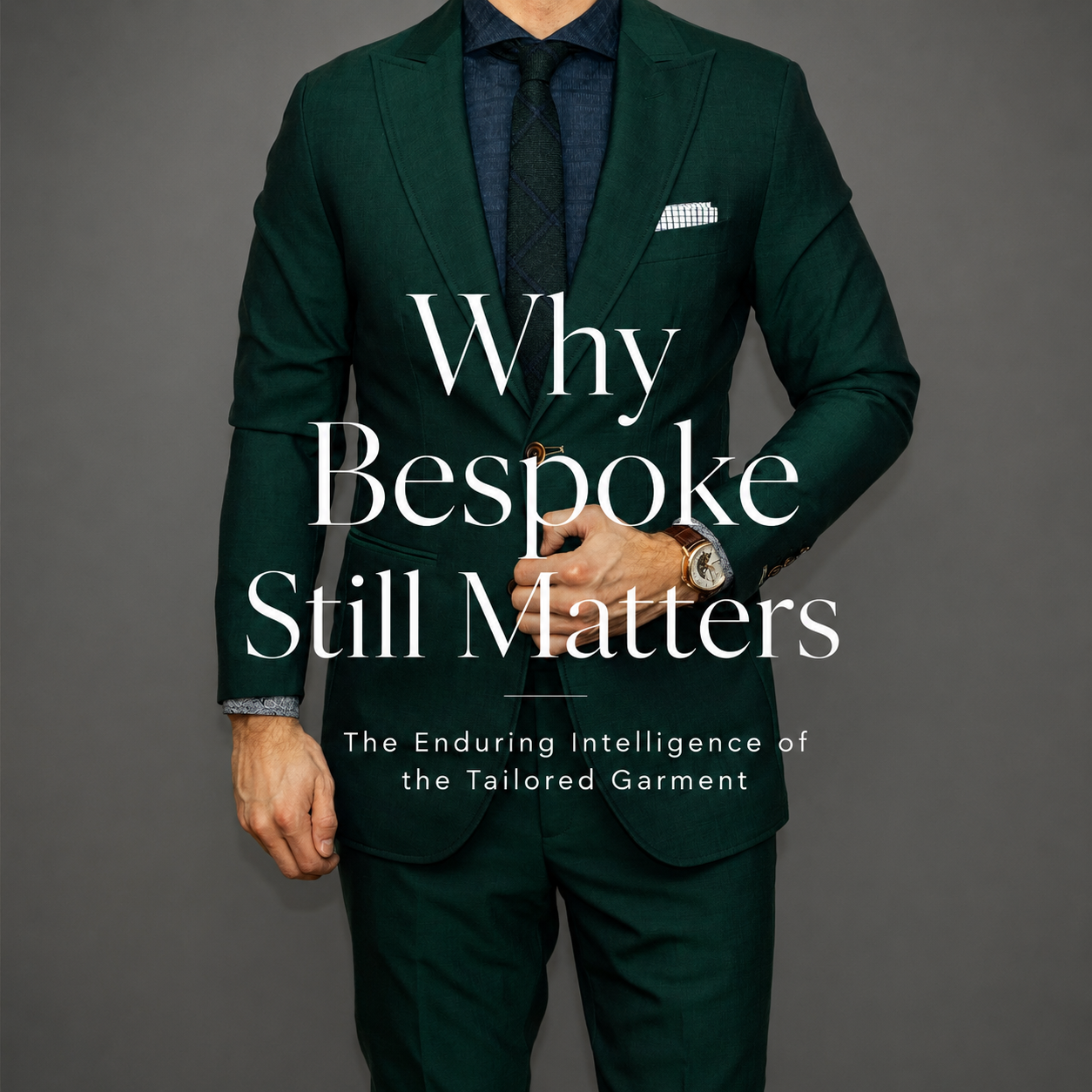
The Enduring Intelligence of the Tailored Garment
In an age of immediate delivery, digital sizing and endlessly replenished wardrobes, bespoke tailoring can appear to belong to another social order. It is slow, exacting and dependent upon a relationship between client and craftsperson. It cannot be reduced to a click, nor can its success be judged from a product photograph.
A bespoke garment emerges through observation, measurement, cutting, fitting, correction and time.
That apparent inconvenience is precisely why bespoke still matters.
The importance of bespoke does not rest on nostalgia. It rests on the survival of a particular kind of intelligence: knowledge of the human body translated into cloth by hand. Bespoke tailoring offers something mass production cannot fully reproduce—not simply a better-fitting suit, but a garment conceived around an individual rather than an individual expected to conform to a garment.
Before Clothing Became a Size
For most of clothing history, garments were made for particular people. The modern system of standardised sizes is comparatively recent, arising alongside industrial manufacturing, military uniform production and the expansion of ready-made clothing.
Standardisation made dress more accessible and efficient, but it changed the governing logic of the garment. Instead of beginning with a body, manufacturing began with a size category.
The tailored suit itself developed over centuries. By the eighteenth century, men’s dress had moved towards increasingly defined combinations of coat, waistcoat and breeches. In the nineteenth century, industrial milling and mass production helped make the dark suit a widely available uniform of modern urban life.
The Victoria and Albert Museum notes that fine woollen cloth in sombre colours became a new status symbol as the black suit spread through Europe’s industrialised cities.
Yet the apparent simplicity of the modern suit concealed sophisticated construction. Tailoring shaped wool into an architecture around the body. Through canvas, padding, pressing and carefully placed seams, the tailor could create balance, authority and ease without obvious ornament.
The suit became restrained on the surface and highly engineered beneath it.
Bespoke Is a Process, Not a Label
The word bespoke is now applied loosely to furniture, travel, fragrance and even software. Within tailoring, however, it describes a demanding process.
According to the Savile Row Bespoke Association, a bespoke suit is cut by an individual, made by skilled craftspeople, based on a pattern created specifically for the client and completed through a series of fittings. The Association states that the finished garment requires at least 50 hours of handwork.
This separates bespoke from made-to-measure.
In made-to-measure, an existing block or base pattern is adjusted to the customer’s measurements. It can produce an excellent garment, particularly when the underlying pattern suits the wearer.
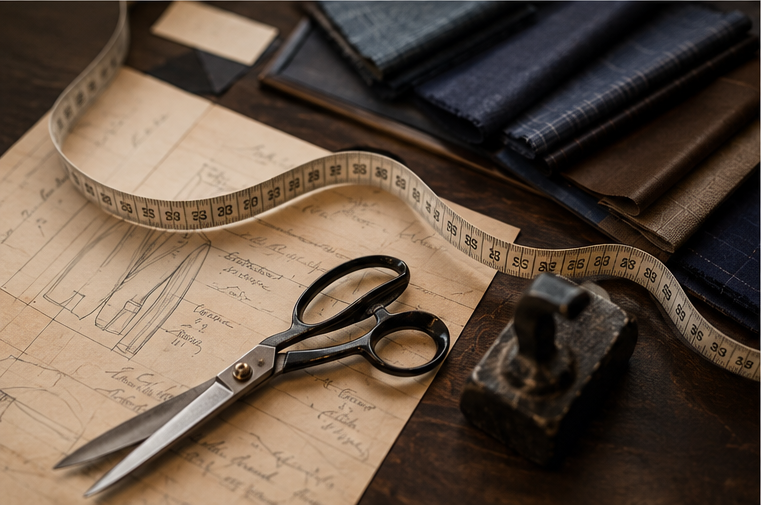
Bespoke begins without that predetermined shape. The cutter creates a unique paper pattern and can respond not only to dimensions, but also to posture, proportion, asymmetry and movement.
No human body is perfectly symmetrical. One shoulder may sit lower than the other. An arm may hang differently. The chest may be prominent, the back rounded, the hips uneven or the stance unusually erect.
Ready-to-wear clothing treats these characteristics as deviations.
Bespoke tailoring treats them as information.
The Fitting as Conversation
A first fitting does not reveal a finished suit. It reveals a hypothesis.
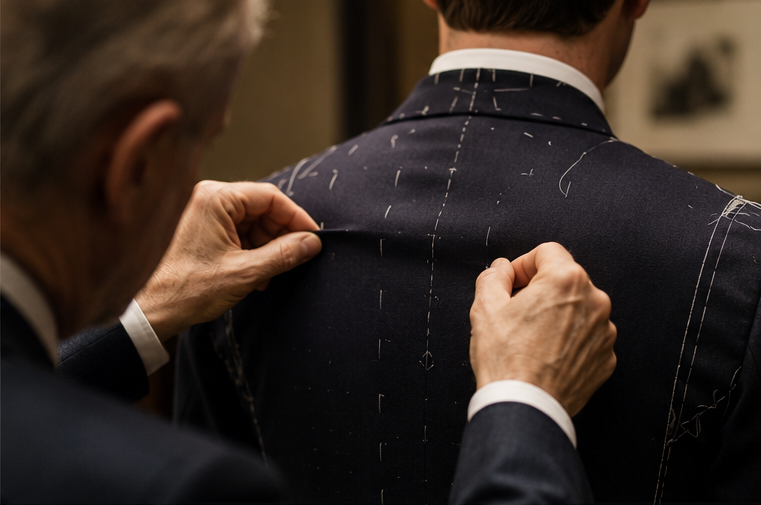
The garment may be assembled provisionally so the cutter can study how the cloth behaves on the client. Balance is examined: whether the coat hangs cleanly, whether the fronts open or close, whether the collar sits against the neck and whether the sleeves fall correctly.
Adjustments are marked, the garment is taken apart, and the pattern is refined.
This process makes the fitting a form of conversation. The client expresses preferences—more ease, a stronger shoulder, a lower buttoning point, greater movement—while the tailor interprets how those preferences can be reconciled with proportion and structure.
The best result is neither the tailor imposing a house style without regard to the wearer nor the client dictating every technical decision. It is collaboration governed by expertise.
The relationship often improves over time. A pattern evolves as the tailor learns how the client stands, works and moves. The client, in turn, becomes more articulate about comfort and taste.
Bespoke is therefore cumulative. Each commission can inform the next.
The Hidden Architecture of Handwork
Handwork in bespoke tailoring is sometimes discussed as though its value were purely romantic: a symbol of patience in a mechanised world. Its real importance is functional.
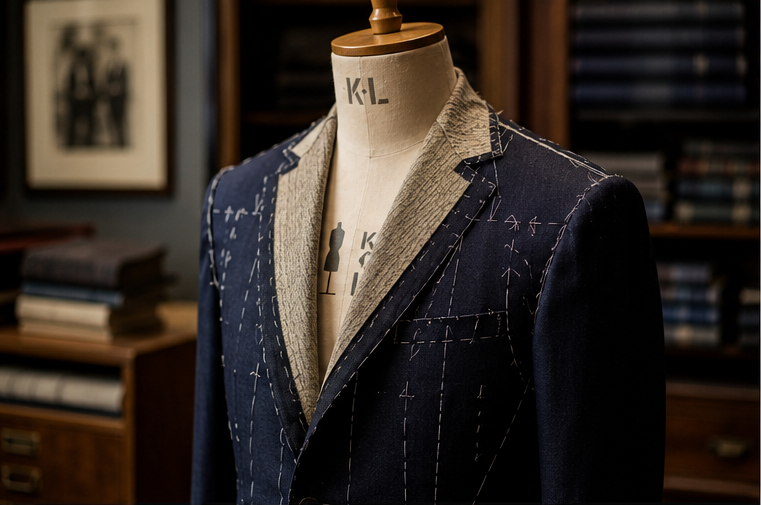
A hand-padded lapel can roll rather than lie flat. A floating canvas can adapt gradually to the body instead of fixing the outer cloth to a fused layer of adhesive. Carefully controlled fullness can permit movement in a sleeve without creating visible bulk. Pressing can shrink, stretch and mould wool into three-dimensional form.
The garment is not merely sewn. It is shaped.
Savile Row’s account of the process describes cloth being shrunk, stretched, pressed, stitched and structured into a three-dimensional garment. Specialist craftspeople may train for years in disciplines such as cutting, coat-making or trouser-making.
This division of skill is important. The suit may appear to be a single object, but it is the result of several specialised judgments.
The cutter determines the pattern and overall balance. Coat-makers and trouser-makers interpret that pattern through construction. Finishers complete details that influence both durability and appearance.
Bespoke is not a single act of craftsmanship but a small ecosystem of expertise.
A Language of House Styles
Bespoke also matters because it preserves difference.
Industrial fashion tends towards scalable consistency. Tailoring houses, by contrast, have historically developed recognisable approaches to proportion, shoulder, waist and movement.
A structured coat can create a strong, formal line. A softer coat can follow the body with less visible intervention. Some traditions favour a suppressed waist and clean chest; others allow more drape through the front and blade.
Anderson & Sheppard, for example, is associated with the English drape cut, developed as a more comfortable alternative to rigid, military-influenced tailoring during the early twentieth century.
These distinctions are subtle, but subtlety is the point.
Bespoke style is rarely dependent upon loud branding. Its signatures are embedded in silhouette and behaviour: how the shoulder meets the sleeve, how the lapel rolls, and how the coat moves when the wearer sits or reaches.
The knowledgeable client does not merely choose a tailor by reputation. He considers which tailoring philosophy is compatible with his body and manner.
A suit should not turn its wearer into an advertisement for the house. It should allow the house’s craft to clarify the wearer.
Why Fit Is More Than Tightness
Contemporary discussions of tailoring often confuse fit with closeness. A garment is praised because it is narrow, sharply tapered or visibly exact.
But a suit that grips the body is not necessarily well fitted.
Proper fit requires balance, line and sufficient ease. A well-cut coat can suggest shape without strain. It can allow the wearer to move while returning to order. The collar remains in contact with the neck. The lapels lie cleanly. The vents do not pull open. Trousers fall rather than cling.
This is one reason bespoke can alter presence. It does not simply conceal or exaggerate the body. It organises it.
The wearer appears composed because the garment itself is composed.
Clothing has always communicated social information, but bespoke at its best communicates care rather than display. It suggests that choices have been made deliberately: cloth appropriate to climate, weight appropriate to use, pockets placed for function and proportions considered in relation to the wearer rather than the season’s dominant image.
Style Rather Than Fashion
Fashion depends upon change. Bespoke depends upon continuity.
This does not mean a bespoke suit is immune to fashion. Lapels widen and narrow. Shoulders become firmer or softer. Trousers rise, fall, expand and contract. Every garment belongs to a particular moment.
The difference is that bespoke can interpret the moment without surrendering entirely to it.
A skilled tailor considers the client’s proportions before adopting a fashionable line. A very narrow lapel may be current but look insubstantial on a broad chest. An extremely short jacket may be popular but disturb the balance of a long torso. A low-rise trouser may be available everywhere yet prove incompatible with the wearer’s natural waist and stance.
Bespoke introduces mediation between fashion and the body.
Its purpose is not to freeze a man in a supposedly timeless uniform. It is to decide which elements of the present deserve to be incorporated and which should be resisted.
This produces personal style: not the absence of change, but a consistent method of responding to it.
An Argument Against Disposability
Bespoke tailoring also offers a counterargument to disposable consumption.
This does not mean every bespoke garment is automatically sustainable, nor that luxury is exempt from excess. It means the process encourages a different relationship with acquisition.
The client must consider purpose before commissioning. Is the garment for business, travel, evening, ceremony or daily wear? In what climate will it be used? What cloth weight can withstand the intended frequency? Which details are genuinely useful?
Time and expense reward deliberation.
A well-made suit can also be maintained. Buttons can be replaced, linings renewed, seams repaired, and alterations made within the allowances left by the tailor. The garment acquires history without immediately becoming obsolete.
Its value is distributed across years of use rather than concentrated in the moment of purchase.
This is a more mature understanding of luxury.
Luxury is not abundance without limit. It is the ability to choose slowly, use fully and maintain well.
The Preservation of Human Knowledge
Perhaps the strongest case for bespoke lies not in the garment but in the continuity of skill behind it.
Tailoring knowledge is embodied. It passes through demonstration, correction and repeated practice. A manual can describe how to cut a coat, but it cannot fully transmit the pressure of the iron, the response of a particular cloth, the amount of fullness a sleeve can absorb or the visual judgment required to correct balance.
These things are learned at the board, under the eye of someone more experienced.
Savile Row’s history includes houses that have operated for generations, while specialist training can take many years. At the beginning of the twentieth century, Henry Poole alone employed hundreds of tailors and cutters, evidence of the scale the craft once possessed.
When demand for true bespoke disappears, the loss is therefore greater than the closure of a business. It is the disappearance of a vocabulary of making.
Once the chain between master and apprentice is broken, reconstructing it is difficult.
To commission bespoke tailoring is consequently not only to purchase a garment. It is to support a living body of knowledge and create the circumstances under which that knowledge can be passed to another generation.
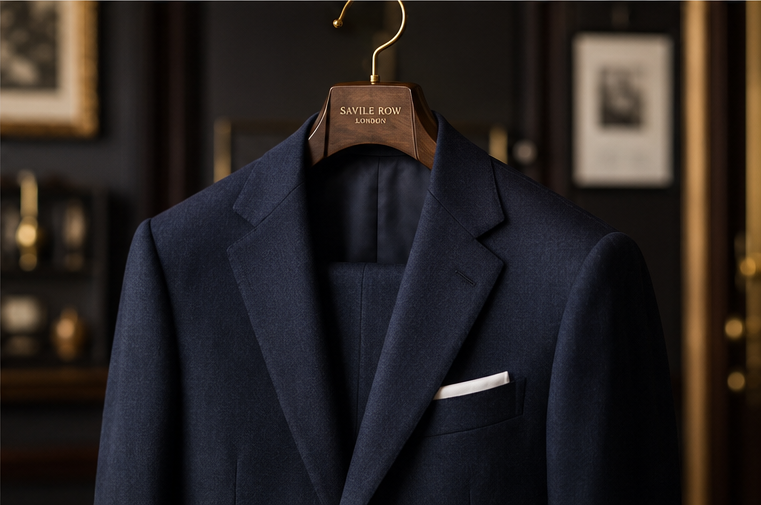
The Quiet Confidence of the Bespoke Garment
The finest bespoke clothing does not necessarily announce its price or provenance.
Its success may be visible only as harmony. The coat sits correctly. The trousers fall cleanly. The cloth moves naturally. Nothing appears to demand attention, yet the entire figure looks more assured.
This is a form of luxury that resists spectacle.
The garment may contain dozens of hours of specialised work, but that work disappears into ease. Craft is most impressive when the wearer does not appear constrained by it.
There is also psychological value in wearing something made with full attention to one’s body. Standard clothing repeatedly asks the individual to determine whether he fits the garment. Bespoke reverses the question.
The garment must prove that it fits the individual.
Why It Matters Now
The modern man does not need a large wardrobe of bespoke suits. Indeed, the logic of bespoke argues against indiscriminate abundance. A small number of garments, correctly chosen, may express its principles more faithfully.
Bespoke matters because it restores proportion between person and possession. The garment begins with the wearer’s actual body, actual life and actual needs.
It asks for patience from the client and accountability from the maker. It favours correction over instant gratification and continuity over novelty.
It also offers a lesson beyond clothing.
Not everything valuable becomes more valuable when accelerated. Some forms of quality depend upon intervals: time to observe, time to reconsider, and time to make.
The bespoke suit is often described as timeless, but this can be misleading. No garment exists outside history. What endures is not one fixed silhouette. It is the method—the disciplined adjustment of tradition to an individual.
That is why bespoke still matters.
It is not a refusal of modernity, but a standard against which modernity can be measured. It reminds us that efficiency is not the only form of intelligence, that fit is more complex than size and that clothes can be made not for a market segment, but for a human being.