
9 Teas Worth Knowing — and What Makes Each One Distinct
From first-flush Darjeeling to smoky lapsang souchong, the world of tea is far more interesting than the supermarket shelf suggests.
Coffee tends to announce itself. Tea is subtler.
It asks for a little more attention: to temperature, steeping time, origin, season and the particular character of a leaf. Two teas grown a few miles apart can taste entirely different. A tea harvested in spring may bear little resemblance to the same plant picked later in the year.
For centuries, tea has occupied an unusual place somewhere between refreshment and ritual. It has fuelled trade routes, diplomatic encounters, family traditions, afternoon pauses and quiet moments alone. Today, as people rediscover slower forms of pleasure, good tea feels particularly relevant.
You need not become a tea obsessive or acquire a shelf full of specialist equipment. A proper kettle, decent water and a handful of good leaves will take you surprisingly far.
Here are nine teas worth knowing.
1. Darjeeling
Often called the “Champagne of teas,” Darjeeling is grown in the foothills of the Himalayas in northeastern India.
Its reputation comes not from strength but delicacy. Good Darjeeling can be floral, lightly fruity and almost wine-like, with a distinctive muscatel quality that is difficult to confuse with ordinary black tea.
The season matters enormously. First flush, harvested in spring, tends to be pale, fresh and aromatic. Second flush, picked later, is fuller and more rounded.
Darjeeling is best drunk without milk, which can overwhelm its subtler notes. Think of it as the tea equivalent of something you sit down to notice rather than simply drink while answering emails.
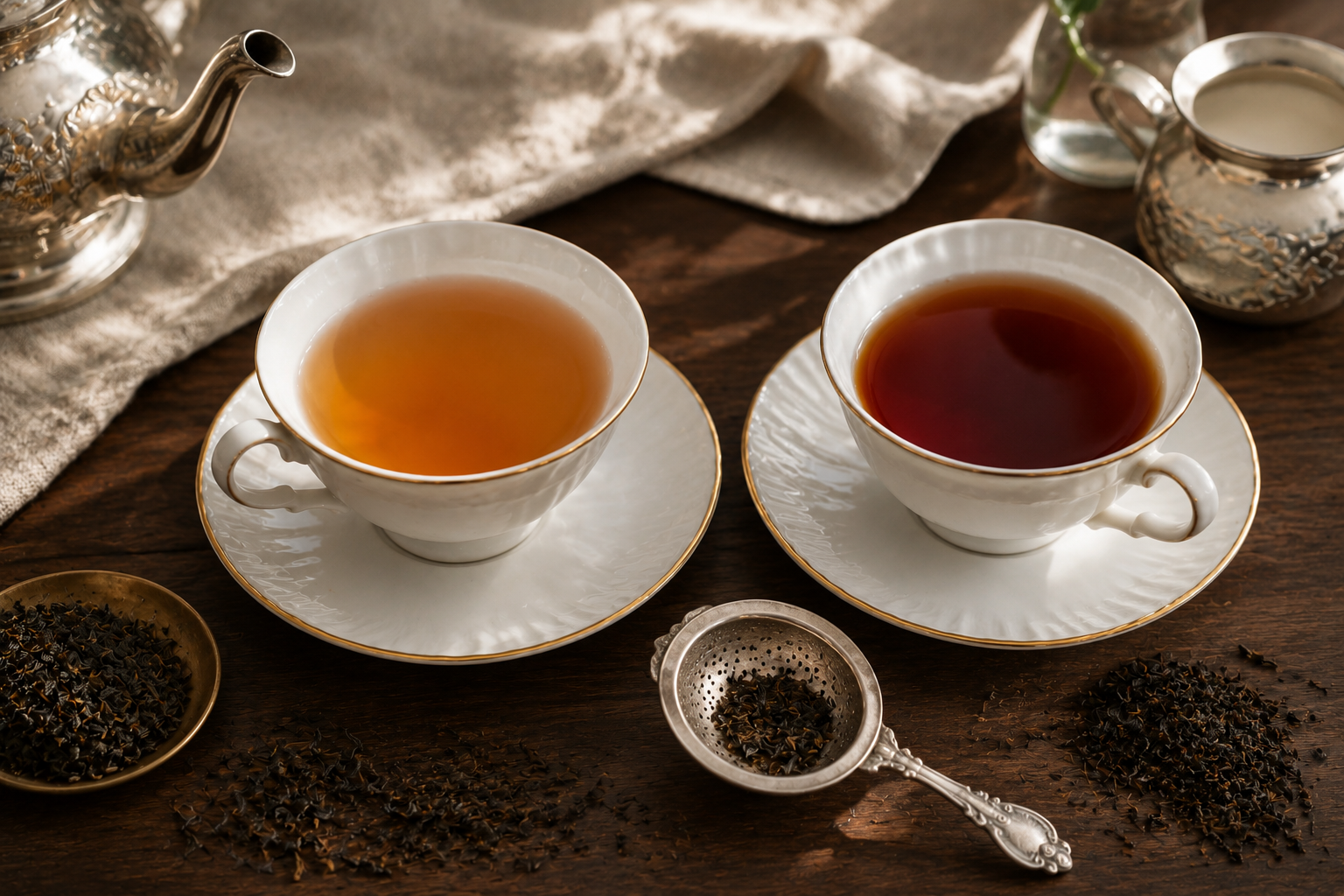
Darjeeling offers delicacy and fragrance; Assam delivers the richer, maltier character associated with the classic breakfast cup.
2. Assam
If Darjeeling is elegant, Assam is reassuringly robust.
Grown in the lush Assam region of India, this black tea is typically malty, rich and strong enough to stand up beautifully to milk. It is one of the foundations of many traditional English Breakfast blends and produces the kind of deeply coloured cup most people picture when they think of proper morning tea.
Assam is particularly well suited to breakfast: substantial without being complicated.
If you enjoy builder’s tea but want to graduate to something with greater depth and provenance, a good loose-leaf Assam is an excellent place to begin.
3. Earl Grey
Earl Grey is technically not a variety of tea at all, but a flavoured tea: traditionally black tea scented with oil from bergamot, the fragrant citrus fruit associated with southern Italy.
The result is unmistakable — floral, citrusy and slightly perfumed.
Its exact origins remain debated, despite the famous association with Charles Grey, the 2nd Earl Grey and British prime minister of the 1830s. Whatever the truth of the story, the blend became one of Britain’s most enduring contributions to tea culture.
Quality varies dramatically. A good Earl Grey tastes aromatic rather than artificially perfumed.
Drink it plain, with a little milk if you insist, or with lemon.
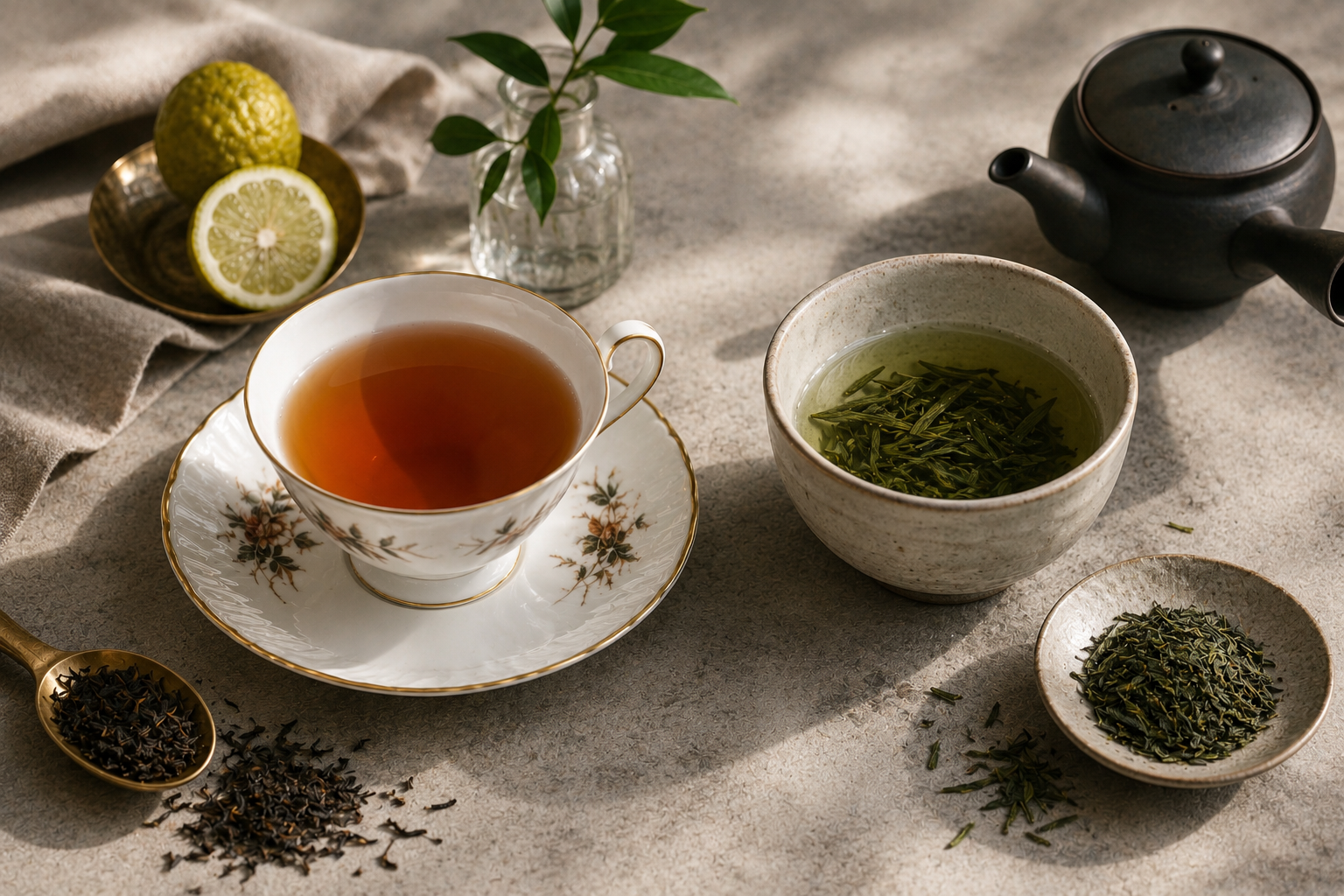
From Earl Grey’s unmistakable bergamot fragrance to the grassy freshness of Japanese sencha, tea can move between entirely different worlds.
4. Sencha
Japan’s most widely consumed green tea, sencha tastes nothing like the black teas familiar to many Western drinkers.
The leaves are steamed soon after harvesting, helping preserve their green colour and producing flavours that can range from grassy and fresh to slightly sweet, vegetal and savoury.
Temperature matters. Pouring violently boiling water over good sencha can make it unpleasantly bitter. Slightly cooler water and a shorter infusion reveal a much more refined drink.
It is one of the best examples of how tea rewards restraint.
5. Matcha
Matcha has become so fashionable that it is easy to forget how unusual it actually is.
Unlike most teas, where leaves are steeped and removed, matcha is finely ground green tea that is whisked directly into water. You therefore consume the powdered leaf itself.
Traditionally associated with the Japanese tea ceremony, matcha has a rich, vegetal, sometimes slightly bitter flavour with considerable umami.
Ceremonial-grade matcha prepared simply with hot water is a very different experience from the sweetened matcha lattes now found in cafés around the world.
Both have their place. But tasting good matcha on its own at least once makes the distinction clear.
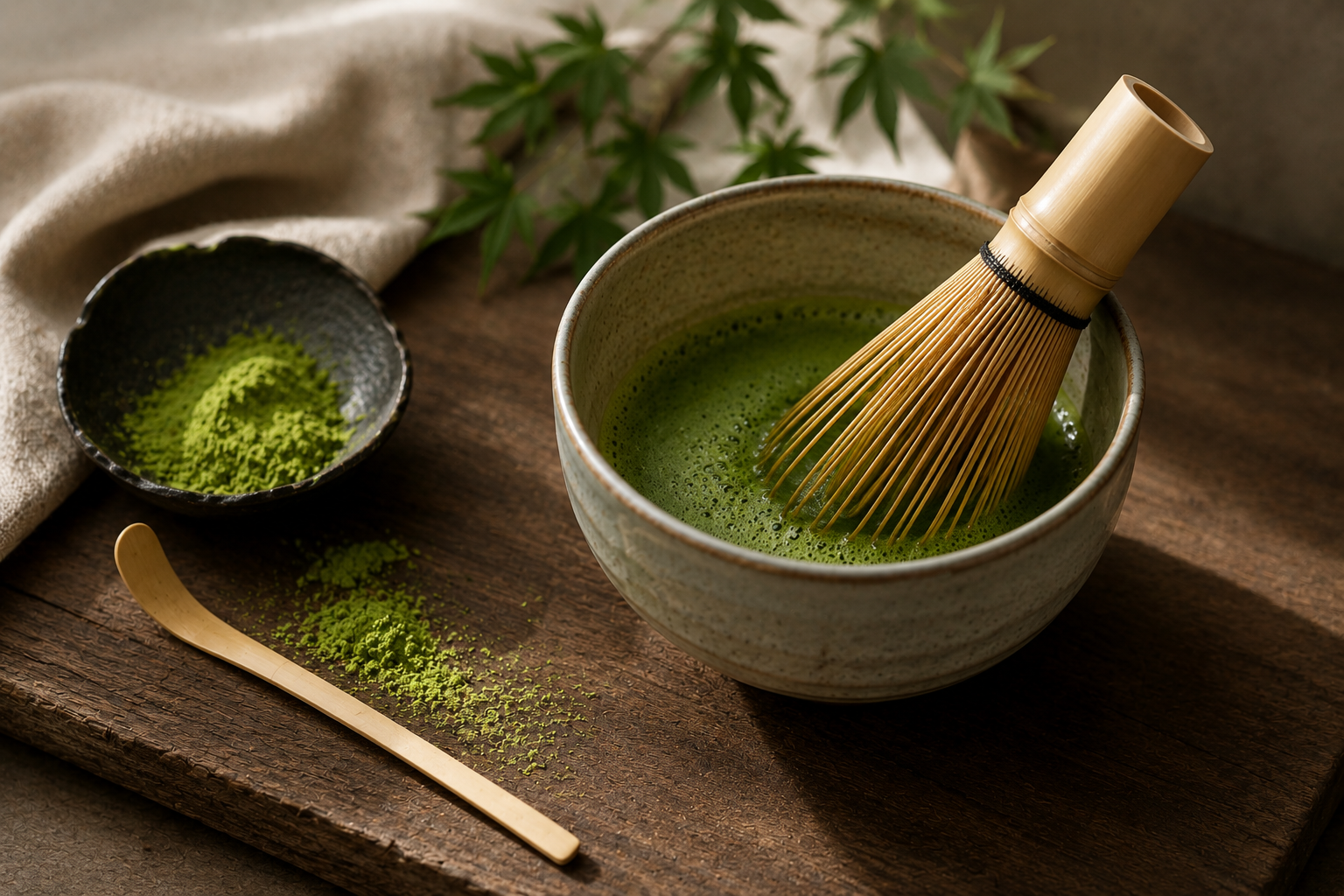
Traditional matcha is whisked directly into water, meaning the finely powdered tea leaf itself is consumed rather than simply infused.
6. Oolong
Oolong sits somewhere between green and black tea, although that description hardly does justice to the category.
Its leaves are partially oxidised, and different production methods can create teas ranging from pale, floral and almost creamy to dark, roasted and remarkably complex.
This makes oolong perhaps the best tea for someone who wants to explore.
Some high-quality oolongs are intended to be steeped several times, with the flavour evolving from one infusion to the next.
There is something wonderfully civilised about a tea that refuses to reveal everything in the first cup.
7. Lapsang Souchong
Few teas divide opinion as quickly.
Traditional lapsang souchong is associated with China’s Wuyi Mountains and is famous for its smoky aroma and flavour. The first sip can bring to mind a wood fire, tobacco, pine smoke or an old library with a fireplace burning somewhere nearby.
It is not subtle.
That is precisely the point.
Lapsang makes an excellent cold-weather tea and can be particularly appealing to whisky drinkers because of its smoky, slightly austere character.
It is one of those things everyone interested in tea should try, even if only to discover that they never want another cup.
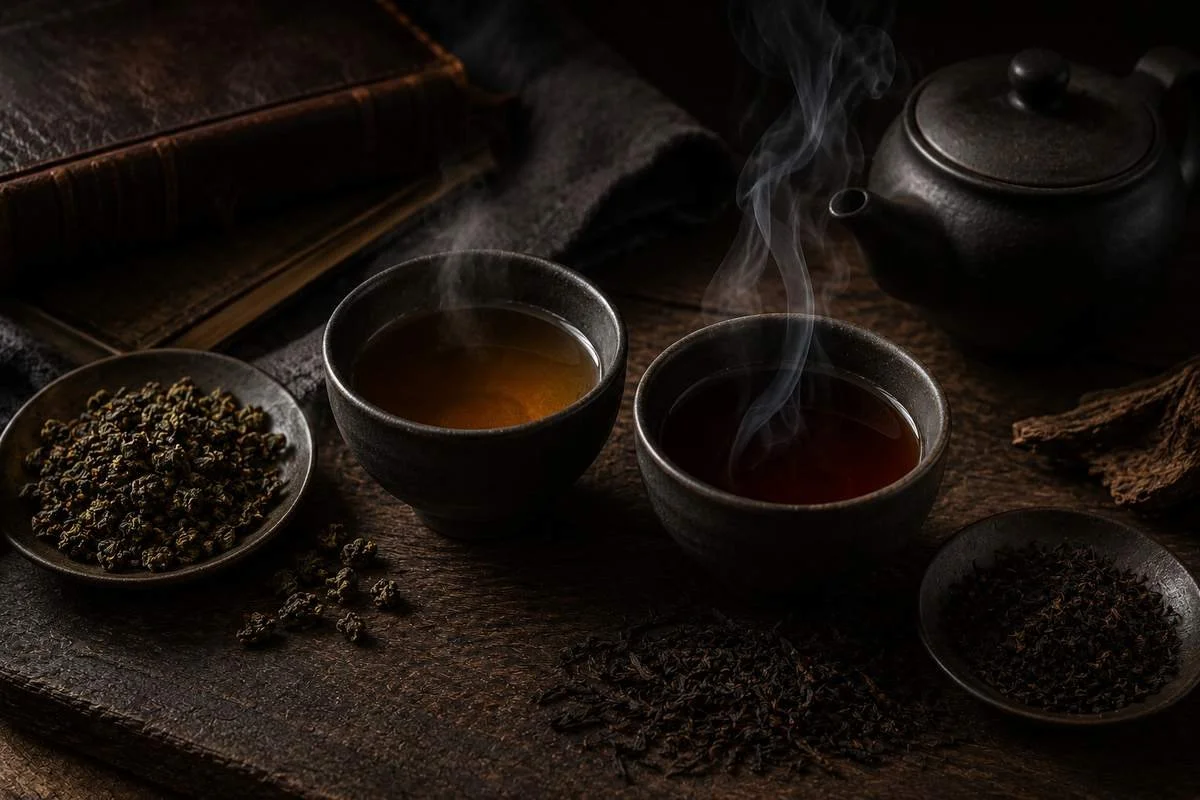
Oolong can range from floral and delicate to deeply roasted, while lapsang souchong occupies tea’s smokier, more uncompromising end of the spectrum.
8. Jasmine Tea
Jasmine tea demonstrates how beautifully fragrance can be incorporated when it is handled with restraint.
Traditionally, tea leaves — frequently green tea — are scented with jasmine blossoms, sometimes through repeated layering processes in which the flowers perfume the leaves before being removed.
The resulting tea should smell deeply floral without tasting like perfume.
It works especially well after a meal, when its fragrance and lightness provide a welcome contrast to richer flavours.
Good jasmine tea also has a remarkable ability to make an ordinary afternoon feel faintly ceremonial.
9. Pu-erh
For the genuinely curious, there is pu-erh.
Produced in China’s Yunnan province, pu-erh belongs to a category of fermented teas whose flavours can develop and change with ageing.
It is often compressed into cakes or bricks rather than sold purely as loose leaves.
Descriptions of pu-erh can sound alarming to the uninitiated: earthy, woody, leathery, forest-floor-like. Yet good examples can be exceptionally smooth and complex.
Tea enthusiasts sometimes collect aged pu-erh much as wine lovers collect vintages, complete with discussions of provenance, storage and year.
It may not be the tea with which to begin your education. It is, however, evidence of just how deep the subject can go.
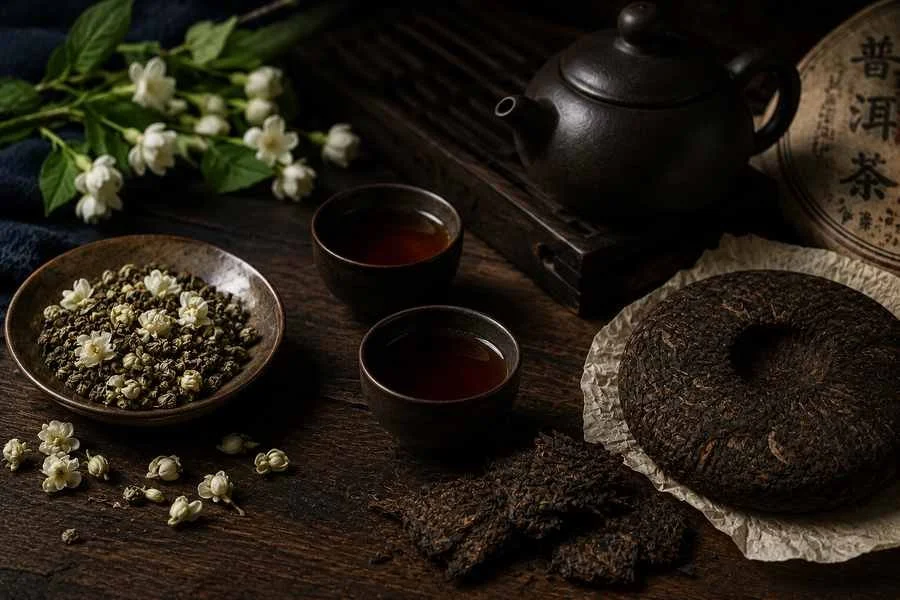
Jasmine tea demonstrates the art of scenting, while aged pu-erh reveals just how complex — and collectible — the world of tea can become.
The Case for Loose Leaf
The greatest improvement most people can make to their tea has very little to do with expensive equipment.
Buy better leaves.
Whole or larger-leaf teas generally have more room to unfurl and release their flavours than the finely broken tea commonly found in inexpensive bags. Loose-leaf tea also allows you to control how much you use and how long you steep it.
Then pay attention to the water.
Green teas tend to prefer cooler temperatures; robust black teas tolerate near-boiling water. Delicate teas often need shorter steeping times than people expect. Leaving everything submerged indefinitely is one reason so many supposedly sophisticated teas end up tasting bitter.
Above all, experiment.
A Small Ritual Worth Keeping
There is no need to turn tea into another arena for expertise and performance.
Its pleasure lies partly in the opposite direction.
Select something good. Heat the water. Put your phone down for five minutes. Allow the leaves to open.
In an age obsessed with efficiency, tea remains stubbornly inefficient. It requires boiling, waiting, pouring and occasionally waiting again.
That may be one of the best things about it.
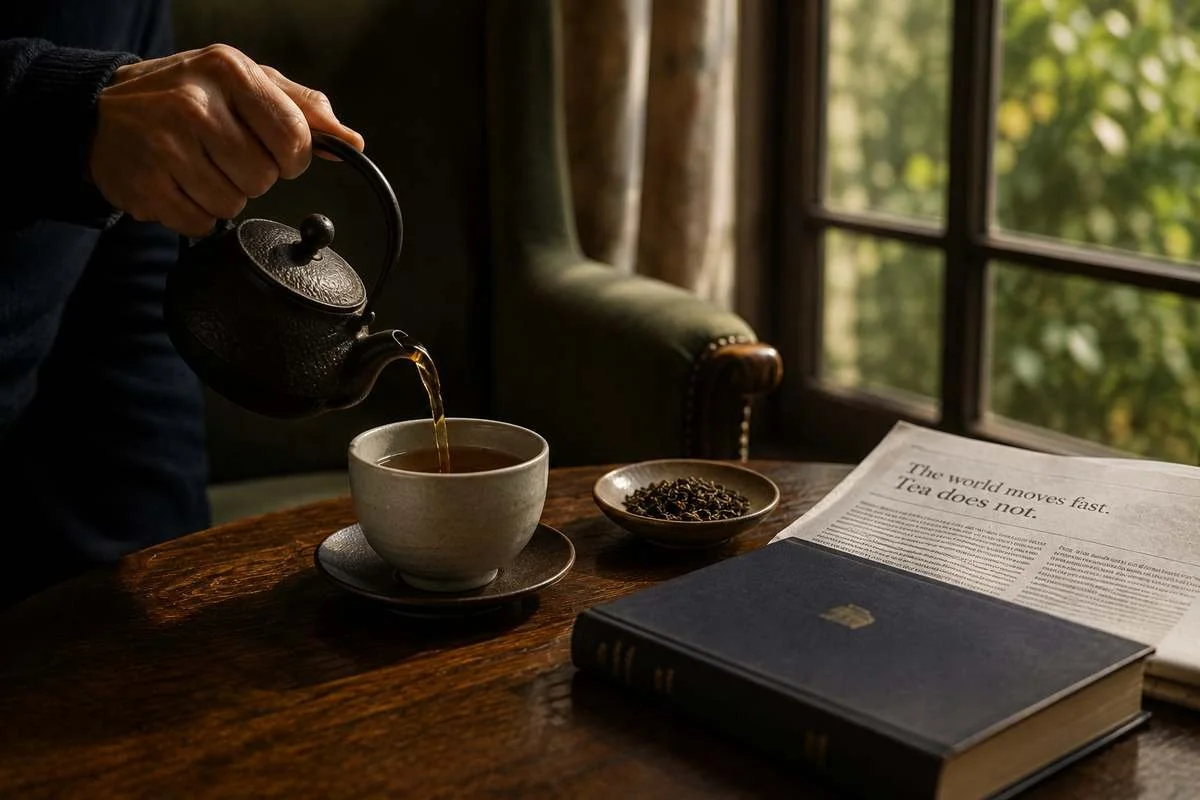
The pleasure of tea lies partly in its refusal to be rushed: heat the water, allow the leaves to open, and give the ritual a few uninterrupted minutes.