
The Difference between English and Italian Tailoring
Written by Claire Blumenthal
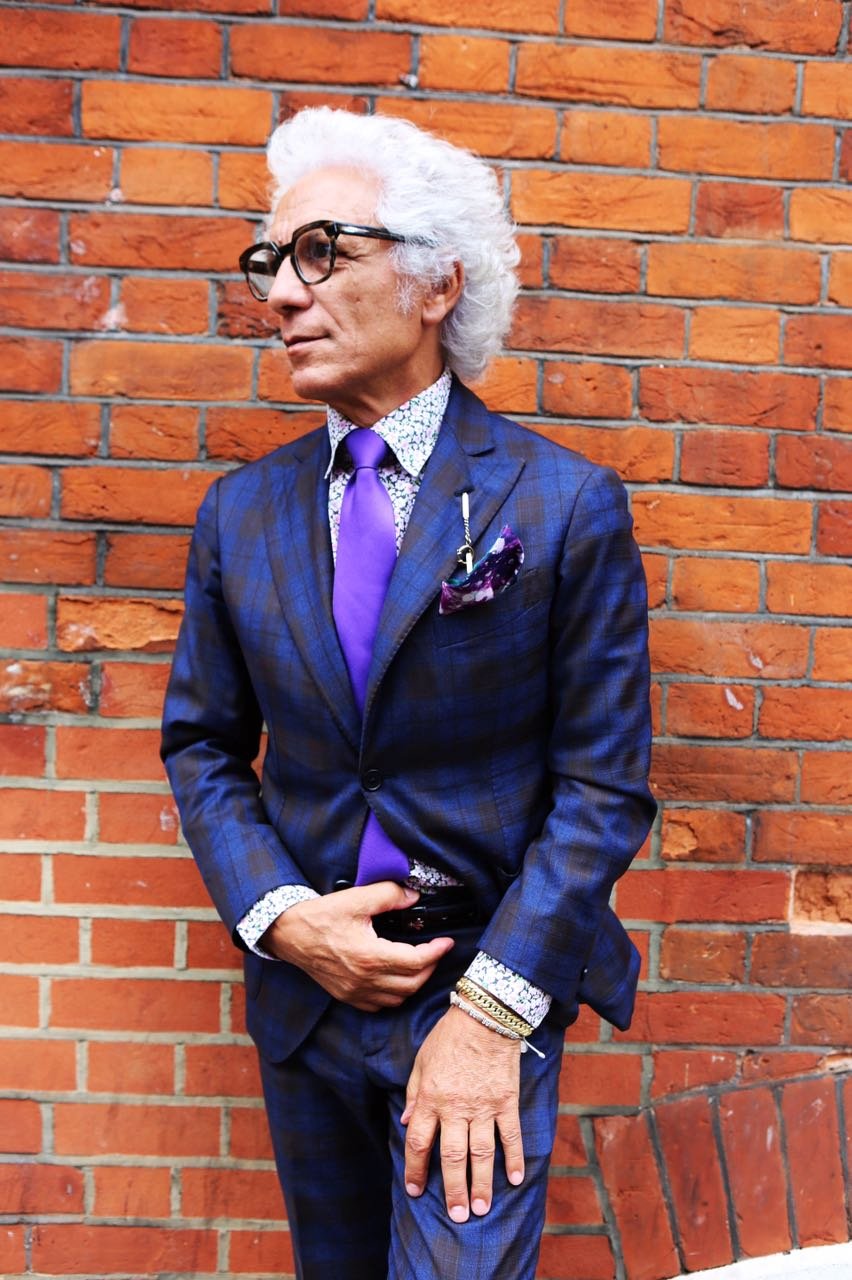
Bespoke tailoring is a craft that originated in England approximately 400 years ago, when suits were essentially battledress or military uniforms. Suits
back then were very structured and form-fitting. Their purpose was to hold the shape of the body in a manner that made men look and feel sublime. Suits
later evolved into the lounge suit that we wear today, which was founded by Anderson & Sheppard of Savile Row. This was the first major shift that suits
had seen since their early heritage of being a battledress. It was when a client asked Anderson & Sheppard for a suit that was slim fit yet comfortable.
Being a Bespoke Tailor, true to their craft, they could not say ‘No’ to any request made by a client.
They invented the legendary ‘Drape Cut,’ which was a suit that appeared slim without compromising on comfort. It had a relaxed form that had a fuller
chest and draped over the midriff in a manner that gave Gentlemen a more smart and relaxed look. This new cut was achieved by cutting against the
grain of the fabric in a diagonal manner, which used the stretch property of wool to conceal the flaws of a Gentleman’s body and drape over it in a
manner that achieved a slimmer silhouette with immense comfort.
The next major shift in the Bespoke craft came when the Italians, who were from Naples, learned the Bespoke craft from Savile Row and took it back to
Italy in the early 1900’s. They changed suit construction to make them better suited to Naples' mostly warm weather. This gave birth to the Neapolitan
Tailoring method that we know today. A Neapolitan jacket is deconstructed, which is made without lining, giving a more casual shirt-like appearance and
remaining cooler and more comfortable. They were often made with bright and vibrant colors and paired with cotton trousers or chinos,
which are ankle-length, cuffed, and worn with slip-ons. A Neapolitan jacket will also have its signature 'camicia rollo' shoulders. 'Camicia' means shirt-like
and 'rollo' means roped. These casual shoulders crafted through careful randomness have a combination of random pleats and a high sleeve head and
were usually paired with a ‘Barchetta’ (boat-shaped) breast pocket.
An English suit jacket will have a clean, classic, slightly angled breast pocket and soft yet structured shoulders that form a natural slope. The trousers
will be comfortable around the thighs, which taper slightly towards the bottom, which is cut at an angle with the front forming a break and a half, while
the back is just kissing the heel of your shoes, which were either oxfords or brogues. These trousers are again geared towards appearing slimmer and yet
being comfortable with a formal elegance.
Today, a Neapolitan jacket speaks of Italian nonchalance, or sprezzatura, known as casual, effortless elegance with straight lines and sharp edges while
English Bespoke Tailoring is slightly structured, more fluid yet formal, with a light drape that accentuates your natural physique while maintaining the
tradition of making Gentlemen look and feel sublime. While they both have their place in the school of traditional Bespoke Tailoring, it is the purpose of
the suit that should decide whether you wish to go with the casual, effortless elegance of Neapolitan Tailoring or the formal, structured, and sublime
elegance of English Tailoring. However, a Gentleman’s wardrobe is only considered complete if it is carefully balanced with both English and Italian
Bespoke Suits. Achieving the right balance of both will give Gentlemen the power to arrive at their destined door of the unknown pleasures of life.